

Talent Acquisition Strategies Every Business Needs in 2026
 Dec 19,2025
 By Priyanka Shinde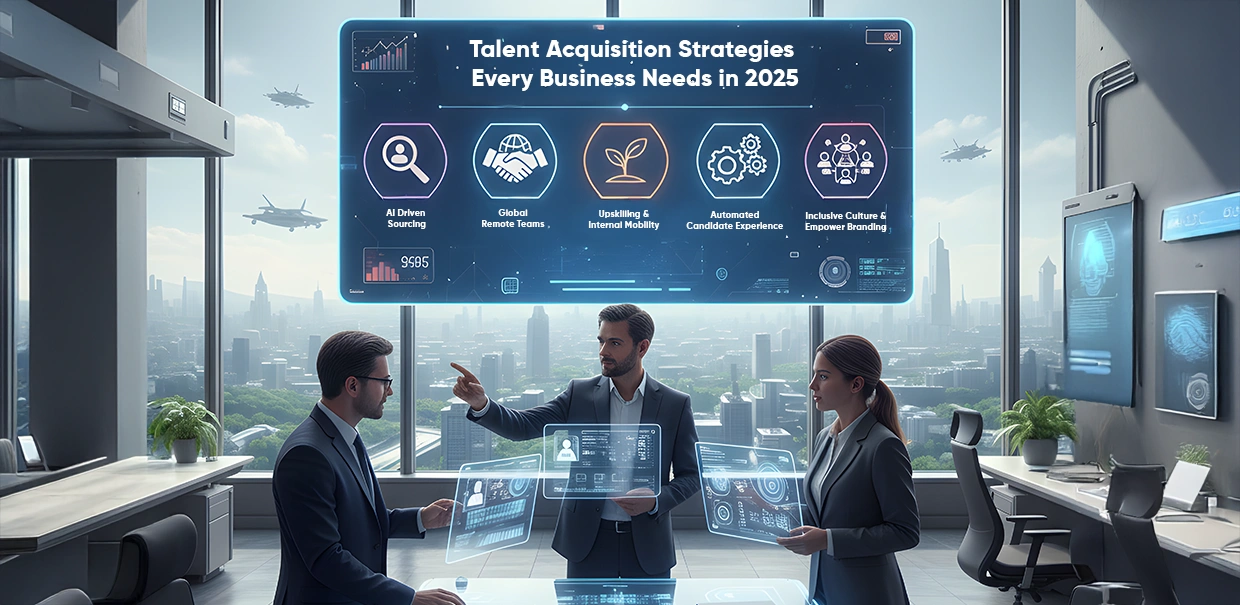
The way companies attract, engage, and hire top talent has changed dramatically in recent years. With the rise of artificial intelligence, remote-first work culture, and evolving employee expectations, businesses must rethink how they approach talent acquisition. What worked five years ago simply won’t cut it in 2026.
Today, a successful hiring strategy requires more than just posting jobs and screening resumes; it’s about building a strong employer brand, leveraging smart technologies, and creating an employee experience that draws in the right people. Whether you’re a small startup or a global enterprise, your ability to secure top talent will determine how well you compete and grow in the years ahead.
In this blog, we’ll explore the talent acquisition strategies every business needs in 2026 and how talent acquisition services and talent acquisition business partners can lead the way in building stronger, smarter hiring practices.
1. Building a Future-Ready Employer Brand
In 2025, candidates don’t just want a job, they want to work with organizations that align with their values. An effective employer brand showcases your company culture, growth opportunities, and commitment to employee well-being.
- Highlight purpose and impact: People want to know how their work contributes to the bigger picture.
- Showcase flexibility: Hybrid and remote work remain a top priority for talent across industries.
- Promote growth opportunities: Learning and development programs are a huge draw for candidates who want to future-proof their skills.
A strong employer brand makes it easier for your talent acquisition specialist to attract the right talent while reducing hiring costs and time-to-fill.
2. Leverage Automation & AI in Hiring
AI is pervasive in recruitment today, from resume filtering to chatbot scheduling. It minimizes time spent, cuts down on manual labor, and allows recruiters more room to focus on relationship building.
Some great ways businesses are using AI include:
- Screening resumes more quickly to identify the best matches.
- Forecasting recruitment requirements before shortages.
- Answering candidate queries 24/7 using chatbots.
- Administering AI-assisted video interviews to test abilities.
This doesn’t mean eliminating the human touch. Instead, talent acquisition business partners are using AI to reduce manual tasks so they can focus on relationship-building and strategic hiring decisions.
3. Prioritizing Candidate Experience
The interview procedure is your candidate’s first experience of your business. It will be rough around the edges if you make it impersonal.
To maintain candidate interest:
- Simplify applications: long, outdated forms drive candidates away.
- Communicate clearly: keep applicants updated throughout the process.
- Respect time: quick interview scheduling and feedback go a long way.
- Personalize interactions: treat every candidate as more than just a resume.
A thoughtful candidate experience ensures your talent acquisition specialist can engage applicants effectively while maintaining a professional yet humanized hiring process.
4. Data-Driven Recruitment Decisions
Data is now the backbone of talent acquisition. Companies are using advanced analytics to track hiring effectiveness, identify bottlenecks, and optimize recruitment campaigns.
Variables of concern in 2025 are-
- Time-to-fill – How quickly you fill vacant spots.
- Quality of hire – New hires’ performance and adjustment.
- Best talent sources – Which sites are delivering the greatest value?
- Retention rates – Is the workforce sticking around after the first year?
Through these understandings, business partners who focus on talent acquisition can sync talent acquisition strategies with larger business objectives rather than short-term vacancies.
5. Diversity, Equity, and Inclusion (DEI) as a Core Priority
Diversity hiring is no longer optional; it’s an expectation. Organizations that prioritize Diversity, Equity, and Inclusion (DEI) in their hiring strategies not only improve workplace culture but also drive innovation and performance.
Practical steps include:
- Inclusive job descriptions that avoid biased language.
- Blind recruitment tools to reduce unconscious bias.
- Diverse interview panels that reflect different perspectives.
- Ongoing DEI training for recruiters and hiring managers.
A talent acquisition specialist who understands DEI practices will help ensure your hiring strategy is fair, inclusive, and attractive to a wide pool of candidates.
6. Identify Internal Mobility and Develop Skills
Sometimes the perfect candidate is actually a current employee. This year, businesses are focusing more on internal mobility, upskilling an already-employed worker for a different job instead of looking outside.
Steps such as:
- Creating programs of mentoring.
- Offering career development opportunities.
- Providing upskilling education by means of online formats.
This strategy also helps hold onto best-in-class talent and lower turnover, a result that any talent acquisition business partner will consider a success.
7. Collaboration Between HR and Business Leaders
Finally, talent acquisition is no longer just HR’s job, it’s a business-wide responsibility. In 2025, talent acquisition business partners play a strategic role by working closely with leadership teams to understand workforce needs and align recruitment strategies with long-term goals.
This collaboration ensures businesses not only attract talent but also retain and nurture them in ways that support growth, innovation, and competitive advantage.
In Summary
Talent acquisition in 2025 will indeed be smarter, quicker, and more focused on people. It will involve leveraging technology wherever possible, but never forgetting that employment is always about individuals.
If you are a talent acquisition specialist, your task is to facilitate a smooth candidate experience while building strong relationships. If you are a talent acquisition business partner, your goal is strategic thinking, balancing recruitment activity with the organization’s long-term goals. Those companies that invest today will be those that will attract, inspire, and hold the best of the best tomorrow.

 Sep 22, 2026

