


Beyond Robotics: The Software Automation Transforming Healthcare Workflows
 Dec 19,2025
 By Priyanka Shinde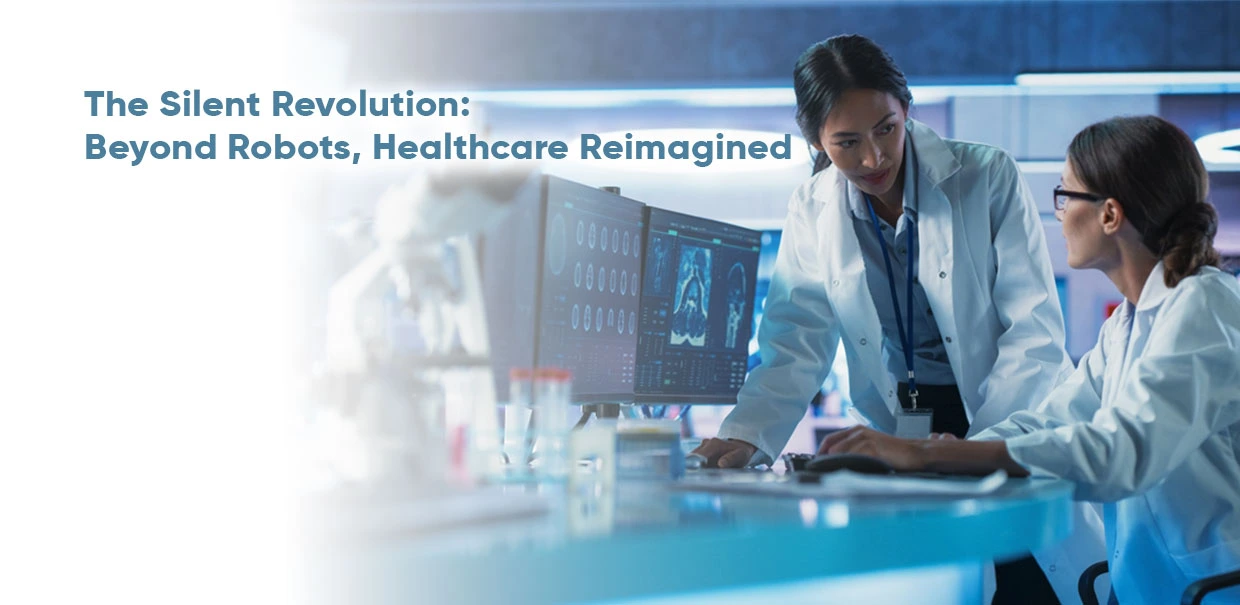
When people think of automation in healthcare, their minds often jump straight to shiny surgical robots or futuristic machines assisting doctors in operating rooms. But the real revolution is happening quietly, behind screens, inside servers, and within intelligent software systems that are reshaping how hospitals, clinics, and care networks function every single day.
This shift isn’t about replacing humans; it’s about redesigning healthcare workflows so doctors, nurses, and staff can finally focus on what truly matters: patient care. Software automation is becoming the invisible workforce that accelerates operations, cuts inefficiencies, and improves accuracy across the entire continuum of care.
Today, healthcare is evolving far beyond robotics, and the future belongs to those who harness the power of smart, automated software.
Why Healthcare Needs More Than Just Robotics
Healthcare organizations are under immense pressure from rising patient volumes, staff shortages, administrative burdens, and skyrocketing operational costs. Robotics can assist with specific physical tasks, but it cannot solve the administrative overload that consumes nearly 25–40% of clinical time.
Software automation steps in to bridge these gaps by transforming:
- How patient data is processed
- How billing and claims are managed
- How clinicians access insights
- How hospitals coordinate workflows
Instead of automating just procedures, it automates the processes that keep healthcare systems running. And this is where the real impact lies.
1. Streamlining Patient Intake and Registration
The patient intake process, once dominated by clipboards, repetitive forms, and long waiting times, is being completely rebuilt by automation.
How software automation improves intake
- Auto-populated electronic forms reduce manual data entry errors.
- AI-driven identity verification shortens check-in time.
- Automated insurance verification confirms eligibility within seconds.
- Smart triage tools categorize patients based on symptoms and urgency.
The result? Patients spend less time in lines and more time receiving the care they came for. Staff, too, gain hours back every day that would have been spent typing, checking, and rechecking information.
2. Enhancing Clinical Documentation with AI
Clinical documentation has always been a pain point for doctors, many spend more time updating records than interacting with patients. With software automation, that’s changing rapidly.
Examples of AI-powered documentation tools
- Voice-to-text clinical notes that auto-summarize consultations
- Automated coding suggestions for diagnoses and treatments
- Smart templates that adapt to specific specialties
These systems dramatically reduce documentation fatigue, helping clinicians maintain accuracy while reclaiming valuable time for patient interaction.
3. Automating Appointment Scheduling & Coordination
Appointment management may seem simple, but behind the scenes, it involves complex moving parts, availability, cancellations, follow-ups, reminders, and resource allocation.
Automation simplifies this by:
- Sending personalized reminders via SMS, email, or app
- Automatically reassigning empty slots after cancellations
- Managing multiple-provider scheduling across departments
- Reducing no-shows through predictive reminders
Patients enjoy greater convenience, and hospitals minimize scheduling conflicts and lost revenue.
4. Transforming Billing, Claims & Revenue Cycle Management
Billing errors are one of the biggest causes of revenue loss in healthcare. Automation is now stepping in as a financial guardian for hospitals.
Key benefits of billing automation
- Real-time verification of insurance details
- Accurate charge capture without manual coding
- Automated submission and tracking of claims
- Faster detection of missing or incorrect documentation
By reducing errors and improving speed, healthcare providers can significantly enhance cash flow while minimizing claim denials.
5. Strengthening Compliance & Reducing Risk
Healthcare is one of the world’s most regulated industries. Managing compliance manually is not only time-consuming but also risky. Automation helps organizations stay ahead of regulations with:
- Automated audit trails
- Real-time compliance checks
- AI-powered alerts for anomalies or violations
- Secure, encrypted data workflows
These systems ensure both patient safety and institutional accountability, without exhausting healthcare teams.
6. Improving Pharmacy & Medication Management
Automation isn’t just for front-desk tasks. Software automation is proving invaluable inside hospital pharmacies, too.
How automation supports pharmacy workflows
- AI verifies prescriptions and flags potential drug interactions
- Automated refills and reminders keep patients on track
- Inventory systems track stock, expenses, and demand patterns
This reduces the risk of medication errors and keeps pharmacy operations efficient and safe.
7. Powering Predictive Insights for Better Decision-Making
One of the most exciting transformations is the shift toward predictive healthcare. Software automation, combined with AI, can analyze historical data, understand patterns, and forecast future scenarios.
What it can predict:
- Patient admission surges
- Staffing needs
- Disease risks
- Equipment utilization
- Potential bottlenecks in care delivery
Hospitals no longer react to problems; they anticipate them.
8. Enhancing Telehealth and Remote Monitoring
As telemedicine becomes mainstream, automation stands at its core.
It helps by:
- Automating appointment setup and virtual check-in
- Syncing patient-generated data from wearables
- Alerting clinicians to abnormal metrics
- Creating automated follow-ups post-consultation
This ensures patients get ongoing attention without overwhelming providers.
9. Creating Interconnected, Intelligent Healthcare Ecosystems
The real power of software automation becomes visible when systems talk to each other.
An automated ecosystem can:
- Sync patient records across departments
- Update clinicians in real time.
- Share diagnostic data instantly
- Coordinate patient transfers seamlessly
With interoperability, healthcare becomes more connected, efficient, and patient-centered.
10. Empowering Healthcare Staff—Not Replacing Them
Perhaps the biggest misconception about automation is that it eliminates jobs. In healthcare, the opposite is true.
Automation takes over:
- Repetitive tasks
- Manual data entry
- Scheduling
- Billing complexities
- Compliance checks
And gives back to staff:
- More time for critical thinking
- More interaction with patients
- More capacity for specialized care
- More job satisfaction
Automation augments human skills; it doesn’t replace them.
A Future Where Care Is Smarter, Faster, and More Human
The next wave of healthcare transformation isn’t about adding more robots; it’s about adding more intelligence behind the scenes.
Software automation is shaping a future where:
- Patients receive quicker, more personalized care
- Providers work with less administrative pressure
- Healthcare systems become more resilient and scalable
- Every workflow becomes smarter and more connected
And this evolution has already begun.
To explore more insights on how automation is reshaping industries, you can read helpful resources on platforms like this automation insights hub, a great place to understand how digital transformation is unfolding globally.
Final Thoughts
Healthcare doesn’t need more complexity; it needs clarity, efficiency, and innovation. Beyond robotics, software automation is quietly becoming the backbone of modern healthcare, powering workflows that save time, reduce errors, and elevate patient experiences.
The future of healthcare isn’t just technological.
It’s intelligent, seamless, and profoundly human.

 Sep 22, 2026

