


How AI and Automation Are Simplifying End-to-End Logistics Processes
 Dec 22,2025
 By Priyanka Shinde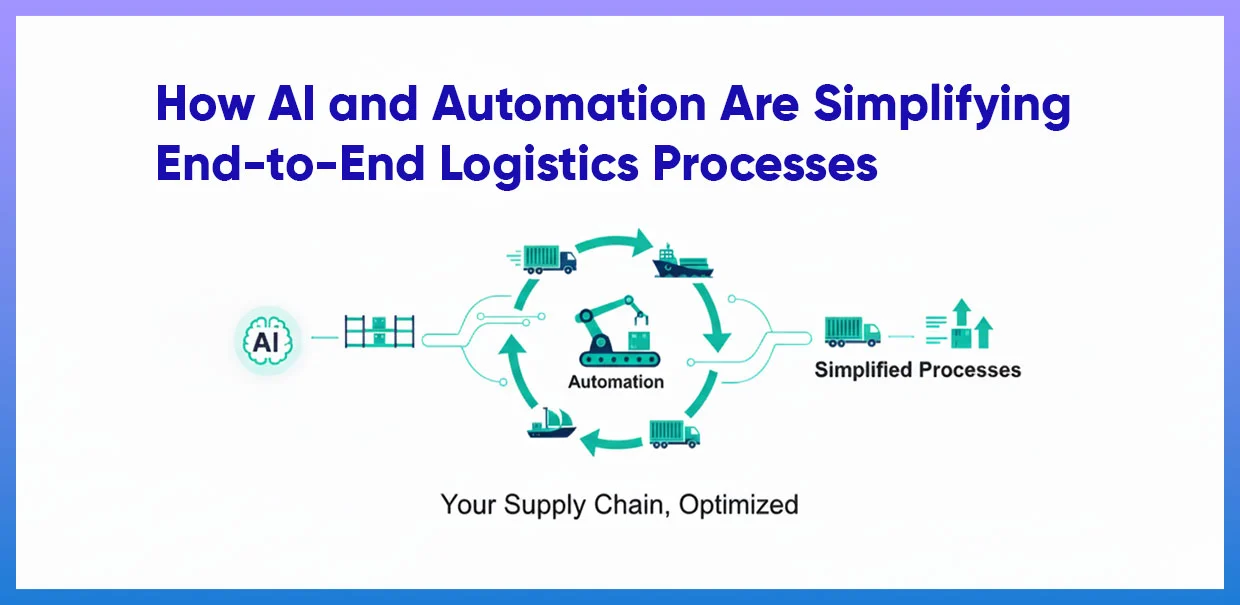
In today’s hyper-connected world, the logistics industry is the backbone of global trade. Every click on an e-commerce platform sets off a complex chain of events, from inventory management and order processing to transportation, warehousing, and delivery. However, managing these interconnected operations manually is like juggling a thousand moving parts at once.
That’s where Artificial Intelligence (AI) and Automation are transforming the logistics landscape. These technologies are not just improving efficiency; they’re redefining how goods move, data flows, and decisions are made across the entire supply chain.
Let’s explore how autonomous operations simplify end-to-end logistics processes. These key operations can be automated, and why adopting these technologies is no longer optional but essential for growth.
The Need for Automation in Modern Logistics
Before AI and automation entered the scene, logistics relied heavily on manual coordination, phone calls, and spreadsheets. The result? Delays, miscommunication, high operational costs, and human errors.
With rising customer expectations for same-day delivery, real-time tracking, and zero errors, traditional systems simply can’t keep up. Automation bridges that gap by performing repetitive, time-consuming tasks faster, while AI brings predictive intelligence to make smarter decisions, from routing trucks to forecasting demand.
Together, they make logistics faster, leaner, and smarter.
Key Logistics Operations That Can Be Automated
Automation can optimize nearly every stage of logistics operations. Here’s a breakdown of how they enhance efficiency across the end-to-end logistics chain:
a. Order Management and Processing
From order placement to fulfillment, automation can handle it all.
- Automated order capture ensures that data from multiple sales channels (e-commerce, retail, and B2B) syncs instantly with your ERP or logistics management system.
- AI-driven validation checks for data accuracy and stock availability, reducing human intervention.
- Chatbots and virtual assistants provide real-time updates to customers, improving communication and satisfaction.
Result? Faster order processing, fewer errors, and happier customers.
b. Inventory and Warehouse Management
Warehousing is one of the most labor-intensive parts of logistics. But with agentic AI, warehouses are turning “smart.”
- Robotic Process Automation (RPA) can manage repetitive data entry and stock updates.
- AI-powered robots handle picking, sorting, and packaging with precision.
- Computer vision systems can track inventory in real time through smart cameras.
- Predictive analytics helps anticipate demand and optimize stock levels, reducing overstocking and shortages.
In short, automation transforms warehouses from storage units into intelligent command centers.
c. Transportation and Fleet Management
Transportation is the heart of logistics—and also its most complex challenge. Automation helps streamline fleet operations in multiple ways:
- AI route optimization algorithms analyze traffic, weather, and fuel costs to identify the most efficient delivery routes.
- Telematics and IoT sensors monitor vehicle performance, fuel usage, and driver behavior in real time.
- Automated dispatch systems assign drivers, vehicles, and schedules without human input.
- Predictive maintenance powered by AI can forecast when a vehicle needs servicing, preventing costly breakdowns.
Together, these systems cut costs, reduce delays, and improve delivery reliability.
d. Supply Chain Planning and Forecasting
AI brings intelligence to supply chain management by enabling data-driven decision-making.
- Predictive AI models analyze historical data, market trends, and customer demand to forecast future needs.
- Automation tools integrate supplier data, logistics performance metrics, and inventory systems to provide real-time visibility.
- Scenario modeling allows planners to simulate “what-if” conditions (e.g., port delays or demand spikes) to make proactive adjustments.
This makes supply chains more resilient, agile, and adaptive in the face of disruptions.
e. Customs and Documentation Processing
Paperwork has long been a pain point in logistics. Automation helps streamline documentation and compliance:
- RPA bots can fill out customs forms, invoices, and shipping manifests automatically.
- AI-powered OCR (Optical Character Recognition) extracts data from physical documents and uploads it into digital systems.
- Automated compliance checks ensure all regulatory requirements are met before shipments leave the dock.
This not only saves hours of manual effort but also reduces compliance risks.
f. Last-Mile Delivery Automation
The “last mile” getting products from the local hub to the customer, is often the most expensive part of logistics. With the help of automation, you can reduce costs and enhance speed:
- AI-powered route optimization ensures the most efficient delivery sequence.
- Automated dispatching and real-time tracking keep customers informed every step of the way.
- Autonomous delivery vehicles and drones are emerging technologies revolutionizing short-distance deliveries.
With automation, companies can meet the rising demand for faster, more reliable doorstep deliveries.
g. Returns and Reverse Logistics
Returns are inevitable, but managing them doesn’t have to be chaotic.
- Automated return labels and AI-based inspection systems simplify the reverse logistics process.
- Machine learning models predict return reasons and help identify patterns, reducing future returns through better forecasting.
- Inventory automation ensures returned goods are restocked or recycled efficiently.
Automation turns a cost-heavy process into an opportunity to boost customer trust.
Benefits of Smart AI Solutions in Logistics
Integrating artificial intelligence brings measurable value across logistics operations:
- Efficiency: Tasks that once took hours now happen in seconds.
- Accuracy: Reduces human errors in documentation, inventory, and dispatching.
- Transparency: Provides real-time tracking and reporting at every stage.
- Cost Reduction: Cuts labor costs, minimizes fuel consumption, and optimizes resources.
- Scalability: Systems can handle peak-season volumes without hiring additional staff.
- Customer Satisfaction: Automated updates and faster deliveries enhance customer loyalty.
In essence, automation transforms logistics from reactive to proactive, giving companies the ability to anticipate problems and act before they happen.
The Future of Logistics: Intelligent and Autonomous
The future of logistics will be defined by self-learning systems and autonomous technologies. Imagine a network where:
- Warehouses are managed entirely by robots.
- Self-driving trucks deliver goods 24/7.
- AI systems forecast global supply chain shifts in real time.
- Digital twins simulate operations to optimize every move before execution.
This isn’t sci-fi; it’s the next phase of AI-driven logistics. Businesses that embrace this evolution early will gain a massive competitive advantage in efficiency, cost, and customer experience.
Summary
AI and automation are no longer “nice-to-have” technologies; they’re the new operating system of logistics. From smart warehousing and intelligent routing to predictive maintenance and autonomous deliveries, these innovations are simplifying every step of the logistics journey.
In a world where speed, accuracy, and transparency define success, companies that leverage AI-driven automation will not only streamline their operations but also set new standards in customer satisfaction and operational excellence.
If your logistics operations still depend on manual processes, it’s time to think smarter. Embrace AI-powered automation, because the future of logistics isn’t just automated; it’s intelligent.

 Sep 22, 2026

