


How Automation Streamlines Insurance Operations and Enhances Customer Experience
 Dec 22,2025
 By Priyanka Shinde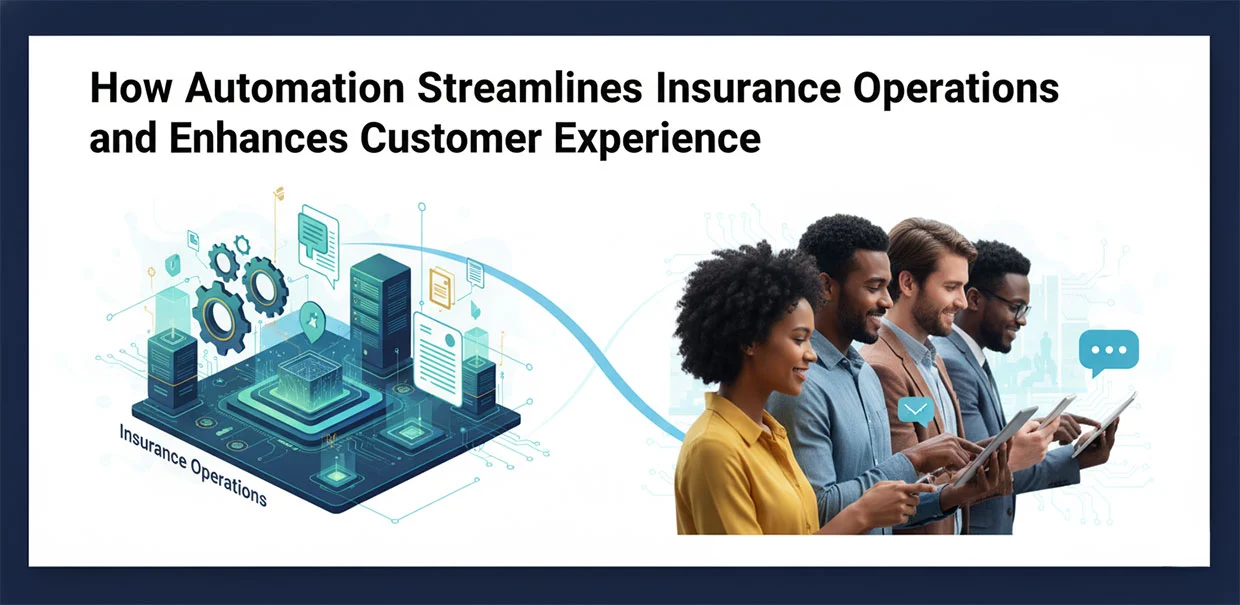
The insurance industry has always been about managing risk, but today, it’s also about managing complexity. With rising customer expectations, increasing regulatory demands, and competitive pressure to deliver faster, insurers are turning to automation as their key to success.
Automation in insurance isn’t just a buzzword anymore; it’s a game-changer that’s reshaping everything from policy administration to claims management, underwriting, and customer support. In short, it’s helping insurers work smarter, not harder.
Let’s explore how automation streamlines insurance operations and enhances the customer experience throughout the entire insurance value chain.
The Digital Shift: Why Automation Matters in Insurance
Today’s policyholders expect speed, transparency, and personalization. They’re not willing to wait days for a quote or weeks for a claim settlement. Automation helps insurers meet these expectations by combining AI, machine learning, robotic process automation (RPA), and intelligent workflows to handle repetitive tasks, analyze data faster, and make more accurate decisions.
Automation doesn’t replace the human touch; it amplifies it. It frees up insurance professionals from manual paperwork so they can focus on what matters most: building trust and relationships with customers.
Key Insurance Operations That Can Be Automated
Automation can touch nearly every department in an insurance company. Here’s how it transforms major operational areas:
a. Policy Underwriting and Risk Assessment
Traditionally, underwriting has been a labor-intensive process involving massive data collection and manual risk evaluation. Automation changes that.
- AI-powered underwriting systems analyze customer data (like credit scores, driving records, and past claims) in real time.
- Machine learning models can predict risk levels faster and with higher accuracy.
- Automated document extraction tools can pull relevant data from PDFs, forms, or scanned documents, saving hours of manual review.
Result: Faster policy issuance, reduced human error, and more accurate pricing.
Example: An auto insurance company can use AI algorithms to instantly assess a driver’s risk based on telematics data, issuing quotes in seconds instead of days.
b. Claims Processing and Fraud Detection
Claims management is one of the most time-consuming parts of the insurance business – but automation is revolutionizing it.
- RPA bots can validate claim forms, cross-check policy details, and initiate settlements automatically.
- AI-based fraud detection systems can analyze thousands of claims simultaneously to flag suspicious patterns.
- Chatbots and virtual assistants can guide customers through claim submissions, providing 24/7 support.
Result: Faster settlements, reduced fraud, and happier customers.
Example: A health insurer using intelligent automation can verify claims, check hospital bills, and approve legitimate claims within hours – not weeks.
c. Policy Administration and Renewal Management
Policy administration involves repetitive, rule-based tasks such as updating customer details, managing renewals, and issuing reminders.
Automation tools can:
- Auto-generate policy documents and send renewal reminders.
- Automatically adjust premium rates based on data changes.
- Update CRM systems with the latest policyholder information.
Result: Reduced administrative workload, increased accuracy, and timely renewals – without missing a beat.
d. Customer Onboarding and KYC (Know Your Customer)
The onboarding process can be frustrating for customers if it involves long forms and slow identity verification. Automation simplifies this process dramatically.
- Optical Character Recognition (OCR) can scan and verify IDs in seconds.
- AI-driven KYC tools can validate documents, match photos, and detect anomalies automatically.
- Automated workflows can trigger welcome emails, set up accounts, and assign policies seamlessly.
Result: Smooth onboarding, better compliance, and a great first impression.
e. Regulatory Compliance and Reporting
Compliance in the insurance industry is non-negotiable – but keeping up with changing regulations is time-consuming.
Automation helps by:
- Tracking changes in regulatory frameworks.
- Automatically generating audit trails and compliance reports.
- Validating transactions for adherence to internal and external guidelines.
Result: Lower compliance risk and higher operational transparency.
f. Sales and Marketing Automation
Insurance sales teams can use automation to reach the right customers at the right time.
- AI-driven customer segmentation identifies leads most likely to convert.
- Marketing automation platforms send personalized offers and reminders.
- Chatbots engage prospects on websites and social media, providing instant quotes.
Result: More leads, higher conversion rates, and consistent communication.
g. Billing and Payment Processing
Automation simplifies premium payments and billing reconciliation through:
- Automated invoicing systems that send bills and payment reminders.
- Payment gateways integrated with AI fraud detection tools.
- RPA bots that reconcile transactions and update ledgers in real time.
Result: Accurate billing, faster payments, and fewer manual errors.
h. Customer Service and Support
Customer expectations in insurance are at an all-time high. People want quick answers and round-the-clock service.
Automation enhances customer support by:
- Using AI-powered chatbots to answer FAQs instantly.
- Enabling self-service portals for claim tracking and policy updates.
- Employing sentiment analysis tools to gauge customer emotions and route cases to the right agents.
Result: Proactive, personalized, and always-on customer support.
How Automation Enhances Customer Experience
While automation makes back-office operations efficient, its real impact shines through in the customer experience.
Here’s how automation makes customers happier:
- Faster Response Times: No one likes to wait – automation ensures quick quotes, instant claim updates, and timely reminders.
- Personalized Services: AI systems analyze behavior and recommend tailor-made policies.
- 24/7 Availability: Chatbots and digital assistants make insurers available anytime, anywhere.
- Transparent Processes: Customers can track claims, policy changes, and payments in real time.
- Error-Free Operations: Automated systems minimize human mistakes, boosting trust and confidence.
Simply put, automation doesn’t just improve efficiency – it makes customers feel valued.
The Human Touch Still Matters
One common misconception is that automation replaces people. In truth, it empowers people.
Automation handles repetitive, rule-based tasks, freeing agents, underwriters, and claims handlers to focus on customer relationships, complex problem-solving, and creative decision-making.
When done right, automation and human expertise work hand in hand to create a seamless, empathetic, and efficient customer journey.
The Future of Automation in Insurance
The next wave of intelligent automation in insurance is about hyper-personalization and predictive decision-making.
Imagine this:
- AI predicting customer needs before they even ask.
- IoT devices feeding real-time risk data for dynamic premium adjustments.
- Virtual assistants guiding customers through policy comparisons like a trusted advisor.
These aren’t far-off ideas; they’re already in motion.
By embracing automation today, insurers can build agile, customer-centric organizations ready for tomorrow’s challenges.
Summary
Automation is transforming the insurance industry from the inside out. It reduces costs, eliminates inefficiencies, accelerates processes, and – most importantly – creates better customer experiences.
From underwriting and claims to customer support and compliance, automation in insurance operations is redefining what it means to deliver value.

 Sep 22, 2026

