


Your Next Insurance Claim Might Be Handled by a Bot—And That’s a Good Thing
 Dec 20,2025
 By Priyanka Shinde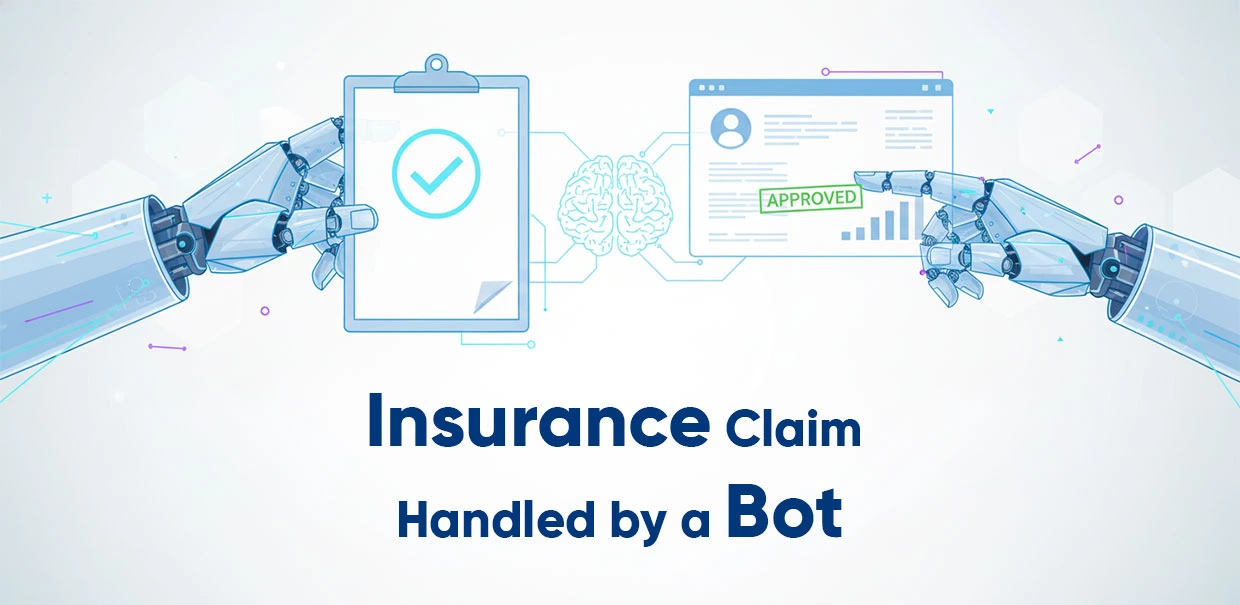
If you’ve ever filed an insurance claim, you know the drill: long forms, endless back-and-forth emails, and waiting days (or weeks) for updates. But here’s something that might surprise you: the next time you submit a claim, it might not be a human who processes it at all.
Instead, it could be an AI-powered bot handling insurance claims faster and working silently behind the scenes, more accurately, and with fewer headaches. And before you worry about robots taking over, let’s be clear: this shift could actually be the best thing to happen to the insurance industry in decades.
The Claim Process Is Ripe for Change
Let’s face it: traditional insurance claim handling is slow, complex, and prone to human error. A single claim can involve multiple departments, lengthy document reviews, and numerous manual steps.
According to McKinsey, up to 30% of claims costs in property and casualty insurance come from inefficiencies in processing and assessment. Add to that the frustration customers face with unclear communication, lost documents, and long waiting times, and you have a recipe for dissatisfaction.
The industry needed a transformation, and Artificial Intelligence (AI) has stepped in to deliver it.
Meet the New Claims Assistant: AI-Powered Automation
Today’s insurers are integrating AI and automation across their operations, particularly in claims management, one of the most critical and customer-facing processes in the business.
Here’s how it works:
- Smart Data Collection: When a claim is filed, an intelligent bot automatically gathers all relevant details, policy data, claim history, and supporting documents.
- Fraud Detection: AI models instantly analyze data for inconsistencies, flagging potential fraud before payments are made.
- Damage Assessment: Using computer vision, AI can analyze photos or videos of damage like a car accident or home flood and estimate repair costs within seconds.
- Decision Making: Once verified, the bot can recommend approval or rejection based on policy terms and historical data.
- Instant Updates: Customers get real-time claim status notifications, reducing the endless “Is there any update?” emails.
All this happens in minutes, not days.
Why This Shift Is a Win-Win
While automation in insurance might sound impersonal, the truth is quite the opposite. The integration of AI-driven workflows actually enhances both customer experience and operational efficiency.
1. Faster Settlements
AI bots process claims around the clock. No breaks, no weekends off. This means your reimbursement could be processed in hours rather than days. In the fast-paced digital era, speed isn’t a luxury; it’s an expectation.
2. Higher Accuracy
Human fatigue and manual data entry errors can delay claims or lead to disputes. AI tools minimize these risks by pulling data directly from digital sources and validating it in real time.
3. Fraud Reduction
Insurance fraud costs billions annually. AI models use predictive analytics to detect unusual patterns like repetitive claims from the same IP address or inconsistencies in damage photos, saving insurers massive sums.
4. Better Customer Experience
AI doesn’t eliminate humans; it empowers them. With bots handling repetitive tasks, human agents can focus on complex claims and empathetic communication, giving customers the best of both worlds: speed and human touch.
The Real-Life Impact: How Insurers Are Doing It
Global insurers are already seeing tangible results:
- Allstate and Progressive have integrated AI-based claims systems that automatically review accident images and provide instant repair estimates.
- Lemonade, a digital-first insurer, made headlines for processing a claim in just three seconds using AI.
- Zurich Insurance reported a 40% reduction in processing time after deploying machine learning in claims assessment.
The shift is no longer theoretical; it’s happening right now.
Behind the Scenes: The Technology Powering It All
The magic behind AI-driven claims lies in a combination of technologies working in sync:
- Natural Language Processing (NLP): To interpret customer emails, claim descriptions, and policy terms.
- Computer Vision: To evaluate images and videos for damage estimation.
- Robotic Process Automation (RPA): To handle repetitive data entry and system integrations.
- Machine Learning (ML): To improve decision-making accuracy over time by learning from historical claim outcomes.
- Predictive Analytics: To assess risk and detect fraudulent patterns before they occur.
Together, these tools create a “digital claims ecosystem,” a seamless loop from claim submission to payout, with minimal human intervention.
What About the Human Workforce?
Here’s the question everyone asks: Will bots replace people in insurance?
The honest answer is no, but they will change the nature of the work.
Claims adjusters, underwriters, and customer service representatives will still be essential. However, their roles will evolve from data processors to problem solvers and advisors.
Instead of spending hours verifying claim forms, they’ll use AI dashboards to focus on exceptions, high-value claims, and customer relationship management.
In other words, AI won’t take jobs; it will take the dull parts of employment and make room for more meaningful, human-centered work.
The Future: Hyper-Personalized, AI-Driven Insurance
Imagine this: your insurance app not only files claims automatically after a car crash (thanks to IoT sensors and telematics) but also suggests coverage changes based on your lifestyle patterns.
That’s not a distant dream; it’s the next step.
Insurers are moving toward hyper-personalization, where AI models use customer data to predict needs, customize premiums, and even offer preventive alerts: “Your water pressure is high; this could cause damage. Let’s fix it before it becomes a claim.”
AI isn’t just transforming claims; it’s redefining the entire insurance value chain.
Why Customers Should Welcome the Bots
For customers, this digital transformation means less paperwork, faster resolutions, and greater transparency.
Instead of chasing updates or worrying about lost forms, they can trust that a bot is working 24/7 to process their claim accurately and fairly.
And if something goes wrong, there’s still a human ready to step in.
In short, AI doesn’t remove empathy; it enables it.
Final Thoughts: The Bot Revolution Is Just Beginning
The insurance industry has long been viewed as slow to innovate. But that’s changing, fast.
From claim filing to fraud detection, AI is injecting speed, intelligence, and trust into processes that once tested customers’ patience.
So the next time you file an insurance claim, don’t be surprised if a bot is on the other end. It might just make your experience smoother, faster, and fairer.
Because in the new world of AI-powered insurance, efficiency isn’t replacing empathy—it’s enhancing it.

 Sep 22, 2026

