


Real-World Examples of Collaborative AI in Business Operations
 Jan 15,2026
 By Priyanka Shinde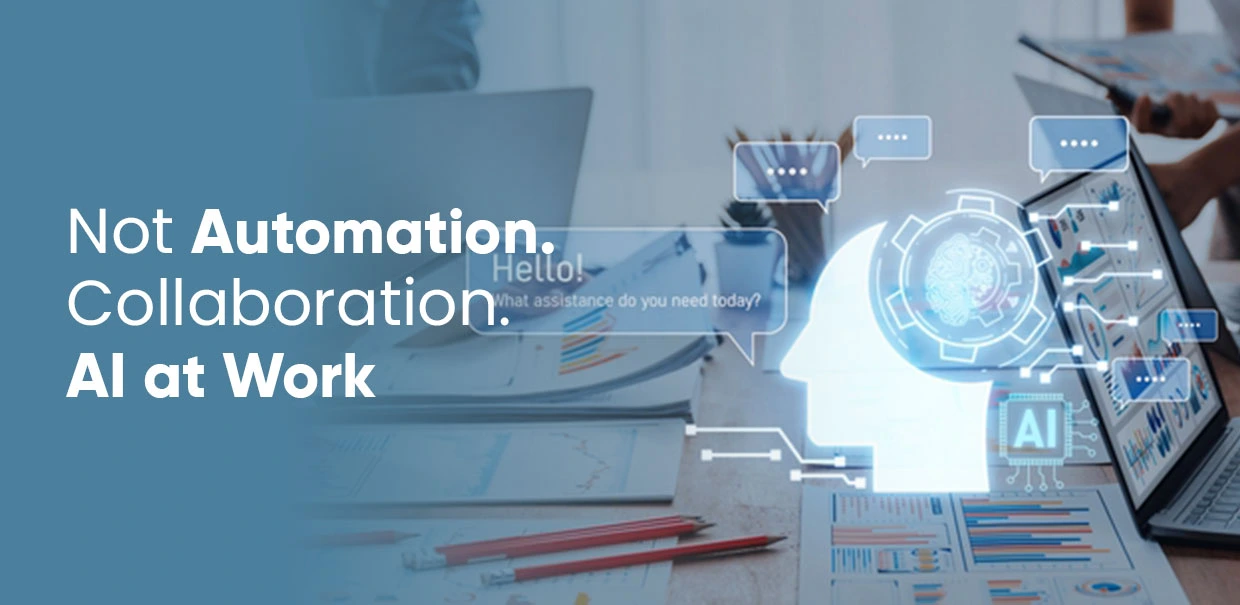
Artificial intelligence is no longer a distant, fully autonomous system making decisions behind the scenes. Today, the most impactful AI systems are collaborative, designed to work with people, not replace them. This shift toward Collaborative AI is reshaping how businesses operate, solve problems, and scale intelligently.
From sales teams using AI copilots to healthcare staff relying on predictive insights, collaborative AI blends human judgment with machine intelligence. The result? Faster decisions, fewer errors, and teams that perform at their best.
In this blog, we’ll explore real-world examples of collaborative AI in business operations, showing how organizations across industries are using it to drive measurable results, while keeping humans firmly in control.
What Is Collaborative AI?
Collaborative AI refers to systems where humans and AI actively work together, each complementing the other’s strengths. Instead of replacing employees, collaborative AI:
- Assists with analysis and recommendations
- Automates repetitive tasks
- Enhances decision-making with data-driven insights
- Learns continuously from human feedback
Think of it as a smart teammate, handling complexity and scale while people provide creativity, context, and ethics.
Why Businesses Are Embracing Collaborative AI
Before diving into examples, it’s important to understand why collaborative AI is gaining traction:
- Improved productivity without workforce disruption
- Higher trust compared to fully autonomous systems
- Better adoption by employees
- Reduced operational risk through human oversight
Now let’s see how this plays out in real business environments.
1. Collaborative AI in Customer Support Operations
Real-World Use Case
In modern contact centers, AI-powered assistants work alongside human agents rather than replacing them.
How Collaboration Works
- AI analyzes customer queries in real time
- Suggests responses, knowledge base articles, or next-best actions
- Human agents review, personalize, and deliver final responses
Business Impact
- Reduced average handling time
- Improved first-call resolution
- Consistent service quality across teams
Agents stay focused on empathy and problem-solving, while AI handles speed and accuracy.
2. Sales Teams Using AI as a Digital Copilot
Collaborative AI has become a game-changer for sales operations, especially in complex B2B environments.
How Collaboration Works
- AI analyzes CRM data, emails, and call transcripts
- Highlights high-intent leads and buying signals
- Recommends follow-up timing and messaging
Real Results
Sales reps don’t blindly follow AI suggestions. Instead, they combine AI insights with relationship context, leading to:
- Higher conversion rates
- Shorter sales cycles
- More meaningful customer conversations
This human-AI partnership helps sales teams sell smarter, not harder.
3. Collaborative AI in Supply Chain & Operations Management
Supply chains are complex, data-heavy, and highly sensitive to disruptions, making them ideal for collaborative AI.
How Collaboration Works
- AI forecasts demand and identifies potential risks
- Recommends inventory adjustments or rerouting options
- Human planners validate decisions based on market context
Business Benefits
- Reduced stockouts and overstocking
- Faster response to disruptions
- More resilient supply chain strategies
AI crunches massive datasets, while humans apply real-world judgment.
4. Finance & Accounting: Humans in Control, AI in Support
In finance, trust and compliance are critical, making collaborative AI far more effective than full automation.
Real-World Example
Finance teams use AI to:
- Flag anomalies in transactions
- Predict cash flow scenarios
- Automate reconciliations
Humans then:
- Review exceptions
- Approve final decisions
- Ensure regulatory compliance
This collaboration reduces manual workload while maintaining accountability and accuracy.
5. Collaborative AI in Marketing & Content Operations
Marketing thrives on creativity, and collaborative AI enhances it rather than stifling it.
How Teams Use It
- AI analyzes campaign performance and audience behavior
- Suggests headlines, keywords, and personalization options
- Marketers refine messaging and brand voice
Outcome
- Data-driven creativity
- Faster campaign optimization
- Better audience engagement
AI provides direction; humans deliver emotion and storytelling.
6. Human Resources: Smarter Decisions, Fairer Outcomes
Collaborative AI is transforming HR operations, from hiring to employee engagement.
Practical Applications
- Resume screening with bias-reduction algorithms
- AI-generated interview questions based on role needs
- Predictive analytics for employee retention
HR professionals remain responsible for final decisions, ensuring fairness, cultural fit, and ethical hiring.
7. Healthcare Operations: AI + Human Expertise
In healthcare operations, collaborative AI supports clinicians without replacing medical judgment.
How Collaboration Works
- AI analyzes patient data and imaging
- Flags potential risks or diagnoses
- Doctors interpret results and make final calls
This partnership improves accuracy, reduces burnout, and enhances patient outcomes.
The Human Element: Why Collaboration Beats Automation
What makes collaborative AI so powerful is trust. Employees are more willing to adopt systems that:
- Explain recommendations
- Allow human override
- Learn from feedback
Organizations exploring AI transformation often start by modernizing workflows and collaboration models, an approach discussed in broader digital transformation strategies like those shared on platforms such as enterprise automation insights.
How to Get Started with Collaborative AI in Your Business
If you’re considering collaborative AI, start small and strategic:
- Identify processes where humans already make complex decisions
- Introduce AI as a recommendation engine, not a decision-maker
- Train teams to work with AI, not against it
- Continuously refine models using human feedback
The goal is partnership, not replacement.
Final Thoughts: The Future Is Human + AI
Collaborative AI is not about choosing between humans and machines; it’s about combining the best of both. Businesses that embrace this mindset are seeing higher productivity, better decisions, and more engaged employees.
As real-world examples show, the most successful AI implementations don’t remove people from the equation. They empower them.
In the coming years, the question won’t be whether your business uses AI, but how well your teams collaborate with it.

 Sep 22, 2026

