

How Enterprises Use SAP Automation Solutions to Modernize Digital Process Automation
 Jan 16,2026
 By Priyanka Shinde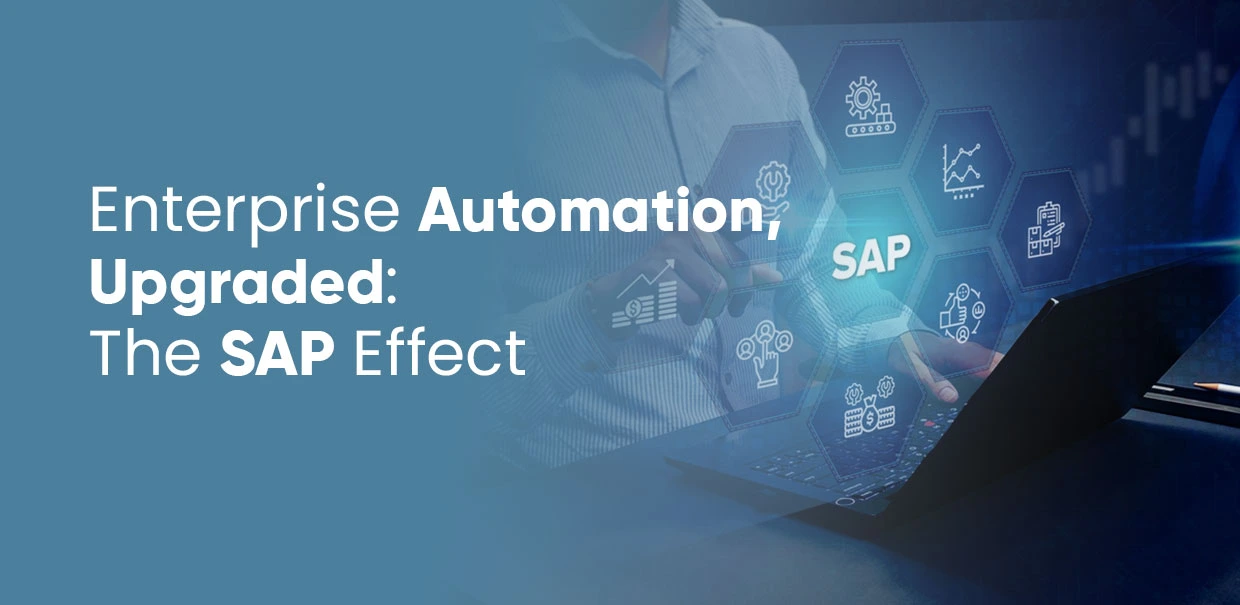
In today’s hyper-competitive business environment, enterprises are under constant pressure to operate faster, smarter, and with fewer errors. Manual processes, siloed systems, and outdated workflows no longer support the scale and agility modern organizations need. This is where SAP automation plays a transformative role.
Enterprises across industries are increasingly turning to SAP automation solutions to modernize their digital process automation initiatives, streamlining operations, improving visibility, and enabling intelligent, data-driven decisions. But how exactly does this transformation happen, and why is SAP automation becoming a cornerstone of enterprise modernization?
Let’s explore how organizations are using SAP-powered automation to reshape the way work gets done.
The Growing Need for Digital Process Automation in Enterprises
Digital process automation is no longer just about replacing paper-based workflows. It’s about rethinking end-to-end processes, procure-to-pay, order-to-cash, and hire-to-retire, and making them intelligent, adaptive, and scalable.
Many enterprises struggle with:
- Disconnected legacy systems
- High dependency on manual approvals
- Slow response to market changes
- Limited real-time process visibility
These challenges directly impact customer experience, compliance, and profitability. SAP digital process automation addresses these issues by embedding automation directly into core business processes, where enterprise data already lives.
Why SAP Is Central to Enterprise Automation Strategies
As a trusted backbone for enterprise operations, SAP sits at the heart of finance, supply chain, HR, manufacturing, and customer operations. Automating around SAP, rather than outside of it, ensures process integrity, data accuracy, and long-term scalability.
SAP enterprise automation enables organizations to:
- Automate complex workflows across departments
- Integrate automation with ERP, SCM, and CRM systems
- Apply business rules consistently at scale
- Reduce human error while maintaining compliance
Instead of building fragile workarounds, enterprises use automation and SAP capabilities to enhance existing SAP landscapes.
How SAP Automation Platforms Modernize Core Business Processes
1. Streamlining Finance and Accounting Operations
Finance teams are often overwhelmed by repetitive, rules-based tasks such as invoice processing, reconciliations, and approvals. With SAP-based automation solutions, enterprises can automate these workflows end-to-end.
Automated validations, intelligent routing, and exception handling enable finance teams to close books faster, reduce errors, and maintain audit readiness, all while freeing professionals to focus on strategic analysis rather than manual tasks.
2. Transforming Supply Chain with SAP SCM Automation Solutions
Supply chain operations are highly sensitive to delays and inaccuracies. Enterprises rely on SAP SCM automation solutions to improve planning, execution, and collaboration.
Automation helps by:
- Triggering replenishment based on real-time demand
- Automating purchase order creation and confirmations
- Flagging supply disruptions early through intelligent alerts
- Synchronizing data across suppliers, warehouses, and logistics partners
The result is a more resilient, responsive supply chain that can adapt quickly to market fluctuations.
3. Accelerating HR and Employee-Centric Processes
From onboarding to performance management, HR processes touch every employee. SAP automation enables seamless, employee-friendly workflows that reduce administrative overhead.
By automating approvals, document handling, and system updates, organizations improve employee experience while ensuring consistency and compliance across global operations. This is a critical component of modern SAP enterprise automation strategies focused on people as much as processes.
4. Leveraging Prebuilt SAP Workflow Automation Solutions for Faster ROI
One of the biggest advantages enterprises gain is access to prebuilt SAP workflow automation solutions. Instead of starting from scratch, organizations can deploy ready-made automation templates for common business scenarios.
These prebuilt capabilities:
- Reduce implementation time
- Lower development and maintenance costs
- Follow SAP best practices
- Allow rapid scaling across regions and business units
For enterprises looking to modernize quickly without disrupting operations, prebuilt automation is often the fastest path to value.
Intelligent Automation: Beyond Simple Task Automation
Modern SAP digital process automation is not limited to basic task execution. Enterprises are combining SAP workflows with AI, machine learning, and analytics to create intelligent automation.
This includes:
- Predictive insights for decision-making
- Automated exception handling
- Smart recommendations based on historical data
- Continuous process optimization
By embedding intelligence into automation SAP environments, organizations move from reactive operations to proactive, insight-driven execution.
Integration and Governance: Key to Sustainable Automation
Successful SAP automation solutions are not implemented in isolation. Enterprises focus heavily on integration and governance to ensure long-term success.
Key best practices include:
- Aligning automation initiatives with business KPIs
- Establishing clear ownership and process governance
- Monitoring performance and compliance continuously
- Ensuring seamless integration with non-SAP systems
The Business Impact of SAP Enterprise Automation
When implemented strategically, SAP enterprise automation delivers measurable business outcomes:
- Faster process cycle times
- Reduced operational costs
- Improved data accuracy and compliance
- Enhanced customer and employee experiences
- Greater agility in responding to change
These benefits compound over time, making automation not just a technology upgrade but a long-term competitive advantage.
Final Thoughts: Modernizing with Purpose
Enterprises don’t modernize for the sake of technology; they modernize to stay relevant, resilient, and ready for what’s next. SAP automation, when aligned with clear business goals, becomes a powerful enabler of digital transformation.
By leveraging SAP automation solutions, adopting prebuilt SAP automation solutions, and extending automation across finance, HR, and SAP SCM automation solutions, organizations can truly modernize digital process automation without losing control or flexibility.
The future of enterprise operations is automated, intelligent, and deeply integrated. And for many organizations, that future is being built on SAP today.

 Sep 22, 2026

