


From Appointment Scheduling to Billing: Healthcare Automation Is Taking Over
 Dec 29,2025
 By Priyanka Shinde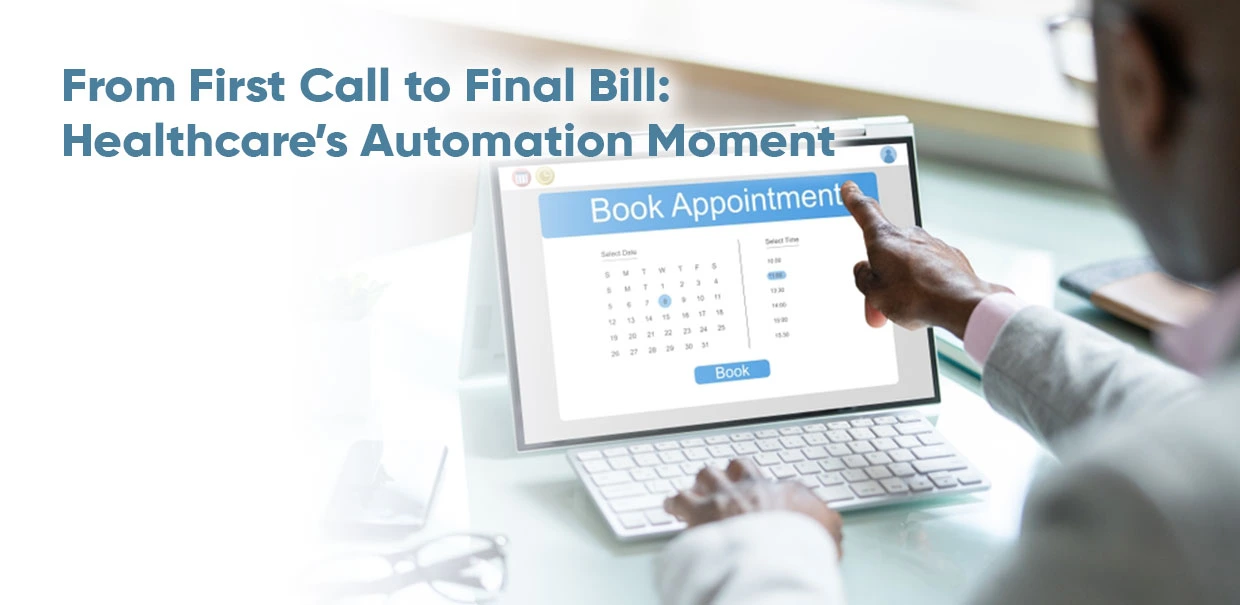
Healthcare has always been about people—patients, doctors, nurses, and caregivers working together to save lives. Yet behind every patient visit is a massive amount of administrative work that often goes unnoticed. Appointment scheduling, insurance verification, medical coding, billing, follow-ups, and reporting can consume hours of staff time every single day. Today, that reality is changing fast. From the front desk to the finance department, healthcare automation solutions are quietly taking over routine tasks, allowing human teams to focus on what truly matters: patient care.
This shift isn’t just about technology; it’s about survival in an industry under constant pressure.
Why Healthcare Can No Longer Rely on Manual Processes
Healthcare systems around the world are facing rising patient volumes, staff shortages, tighter regulations, and increasing operational costs. Manual workflows, spreadsheets, phone calls, and paper-based processes simply can’t keep up anymore. Errors in scheduling can lead to missed appointments. Mistakes in billing can delay payments or frustrate patients. Even a small inefficiency can snowball into long wait times and revenue leakage.
This is where AI in healthcare and automation steps in, not to replace people, but to support them. Automation helps healthcare organizations do more with less, without compromising accuracy or compliance.
Smarter Appointment Scheduling: The First Touchpoint
For many patients, appointment scheduling is their first interaction with a healthcare provider. Long phone queues, limited availability, and manual confirmations often create friction before care even begins.
With AI automation, scheduling systems can now:
- Automatically book, reschedule, or cancel appointments
- Match patients with the right specialist based on availability and urgency
- Send reminders via SMS or email to reduce no-shows
- Sync calendars across departments in real time
By automating this process, front-desk staff spend less time answering repetitive calls and more time assisting patients who need personalized attention. Patients, in turn, enjoy faster access and a smoother experience.
Streamlining Patient Intake and Records
Patient intake forms, data entry, and document verification are notorious time-drainers. Automation tools can extract data from digital forms, insurance cards, and referrals and directly update electronic health records (EHRs).
This is where robotic process automation in healthcare plays a key role. RPA bots can mimic human actions, copying data, validating fields, and updating systems, without fatigue or error. The result is cleaner records, fewer delays, and improved compliance with healthcare regulations.
When combined with AI, these systems can also flag missing information or inconsistencies before they cause downstream issues.
Clinical Support Without the Burnout
Doctors and nurses often spend more time on documentation than with patients. Automation doesn’t diagnose illnesses or make treatment decisions, but it can support clinical workflows by:
- Transcribing doctor-patient conversations into structured notes
- Updating charts automatically after visits
- Managing lab orders and test results
- Triggering alerts for follow-ups or abnormal readings
By reducing administrative burden, healthcare automation solutions help clinicians reclaim valuable time, reduce burnout, and improve overall care quality.
Billing and Claims: Where Automation Makes a Huge Impact
Billing is one of the most complex and error-prone areas in healthcare. Multiple payers, changing regulations, coding updates, and manual claims processing often lead to delays and denials.
Automation transforms this process by:
- Automatically coding procedures using standardized rules
- Verifying insurance eligibility in real time
- Submitting claims faster and more accurately
- Tracking claim status and flagging denials for quick resolution
With AI automation, billing teams gain better visibility into cash flow while reducing human error. Patients benefit too, with clearer bills and faster resolutions.
Revenue Cycle Management, End-to-End
From the moment an appointment is scheduled to the final payment, automation can oversee the entire revenue cycle. Predictive analytics powered by AI can identify patterns, such as recurring claim denials or payment delays, and suggest improvements before revenue is lost.
You can also explore the role of machine learning in predictive healthcare analytics.
Many healthcare automation companies are now focusing on end-to-end platforms that integrate scheduling, clinical documentation, billing, and reporting into a single automated workflow. This holistic approach eliminates data silos and improves decision-making at every level.
Compliance, Security, and Trust
Healthcare data is sensitive, and compliance is non-negotiable. Modern automation tools are designed with security and regulatory standards in mind. Automated audit trails, access controls, and real-time monitoring help organizations stay compliant while reducing the risk of costly violations.
Automation doesn’t cut corners; it standardizes processes, ensuring rules are followed consistently across departments.
The Human Side of Healthcare Automation
One of the biggest misconceptions is that automation makes healthcare impersonal. In reality, it does the opposite. By handling repetitive, time-consuming tasks, automation gives healthcare professionals more time to listen, explain, and care.
Patients notice the difference too; shorter wait times, fewer errors, faster billing, and smoother communication all contribute to a better overall experience. This is why interest in AI in healthcare continues to grow year after year.
What the Future Holds
Healthcare automation is no longer optional; it’s becoming a foundational capability. As AI models grow smarter and systems become more integrated, automation will move beyond efficiency into proactive care, predictive insights, and personalized patient journeys.
For organizations exploring this path, learning from real-world automation use cases and industry insights can be a strong starting point. Many healthcare leaders are already sharing practical examples and trends across trusted resources, including insights found in automation-focused healthcare blogs.
Final Thoughts
From appointment scheduling to billing, healthcare automation is transforming the way care is delivered behind the scenes. It reduces errors, saves time, cuts costs, and, most importantly, gives healthcare professionals the freedom to focus on patients again.
The takeover isn’t sudden or disruptive. It’s steady, practical, and deeply human at its core. And for healthcare organizations ready to embrace it, automation isn’t just a technological upgrade; it’s a strategic advantage for the future of care.

 Sep 22, 2026

