

AI Is the New Lab Partner in Pharma Innovation
 Dec 22,2025
 By Priyanka Shinde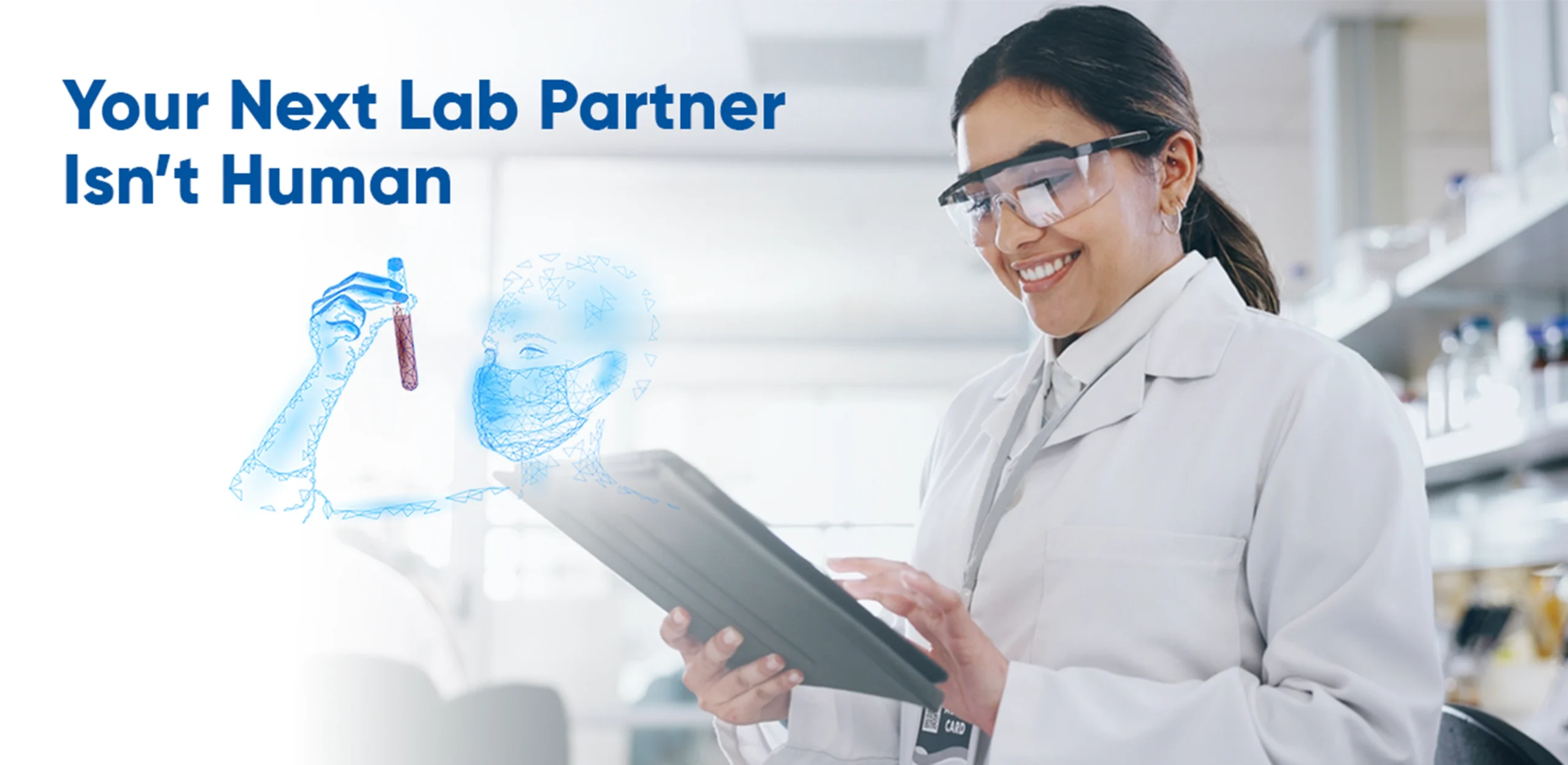
Introduction – A New Era in Pharma R&D
The pharmaceutical industry is stepping into a new era where AI is no longer a distant concept; it’s sitting right in the lab, acting as a powerful research partner. While traditional pharma R&D has always been rooted in manual experiments, slow drug discovery, and years of clinical trials, AI is rewriting the script entirely. Today, AI helps researchers simulate experiments, discover molecules faster, and reduce costly trial-and-error cycles.
This shift is not about replacing scientists; it’s about empowering them with supercharged tools that make research smarter, faster, and more accurate.
Why Pharma Needed a New Lab Partner
Complex Drug Development Cycles
Drug development is one of the most complex scientific journeys. It often takes more than a decade to move a drug from idea to approval. AI helps simplify this timeline by reducing manual workload and providing insights that humans alone cannot uncover fast enough.
High Costs and High Risks
With billions spent annually on R&D, pharma companies face intense pressure to innovate without waste. AI optimizes research pathways, reducing risks and increasing the chances of successful outcomes.
Growing Demand for Precision Medicine
Modern patients expect treatments tailored to their unique genetic and environmental profiles. AI helps analyze this data at scale and supports the development of personalized therapies.
How AI Is Reshaping the Pharma Landscape
Accelerating Drug Discovery
Predicting Molecules Faster Than Human Researchers
AI models can study millions of molecular structures in seconds, evaluating their potential effectiveness and side effects. This drastically speeds up the discovery phase.
AI-Powered Compound Screening
Instead of testing thousands of compounds in a lab, AI performs virtual screening to identify the most promising candidates for physical trials.
Enhancing Clinical Trials
Patient Recruitment and Retention
AI analyzes demographics, health records, and biomarker data to match the right patients to the right trials. This reduces delays and increases trial accuracy.
Real-Time Monitoring and Data Insights
Wearables, smart devices, and AI algorithms allow researchers to track patient progress in real time, ensuring safer and more effective trials.
AI in Drug Formulation and Manufacturing
Process Optimization Using Automation
AI-powered automation helps maintain precise control over temperature, pressure, and chemical reactions, resulting in faster and more accurate drug production.
Predictive Quality and Compliance
AI predicts potential errors or quality issues before they occur, ensuring every product meets regulatory standards.
Partner, Not a Replacement
AI doesn’t replace scientists; it expands their capabilities. Think of it like a digital colleague who works 24/7, crunches data at lightning speed, and highlights insights humans might miss. Researchers still make the decisions; AI simply supports them with intelligence-driven suggestions.
Real-World Applications of AI in Pharma
AI-Powered Molecule Generation Platforms
Tools like generative AI design entirely new molecules that could become future medicines.
Personalized Drug Development
AI models predict how individuals will respond to specific drugs based on genetics and lifestyle factors.
Predictive Pharmacology and Toxicity Testing
Before a drug even enters a lab, AI can simulate how it might react in the human body—saving immense time and cost.
Benefits AI Brings to Pharma Organizations
Reduced Time-to-Market
Drug development cycles shrink from years to months in the early discovery stage.
Better ROI on R&D Investments
Smarter research, fewer manual iterations, and more targeted experiments reduce unnecessary costs.
Increased Safety and Compliance
AI continuously monitors data points across labs and manufacturing, reducing human error.
Challenges in Adopting AI in Pharma
Data Privacy and Security Concerns
Pharma companies must carefully protect sensitive patient and molecular data.
Integration With Legacy Systems
Older IT systems often struggle to support modern AI platforms.
Talent and Skill Gaps
Successful AI adoption requires upskilling employees in data science, automation, and digital tools.
The Future of AI-Driven Pharma Innovation
Autonomous Labs
Imagine robotic labs where experiments are run automatically, guided by AI.
AI-Driven Clinical Intelligence
AI will not only process data but also help create predictive patient-care models.
Hyper-Personalized Medicine
From tailor-made drugs to precise dosing, AI will drive next-level personalization.
Conclusion
AI is truly becoming the new lab partner in pharma innovation. It accelerates discovery, increases safety, improves accuracy, and brings unimaginable efficiency to every stage of drug development. As pharma organizations embrace AI, they are not just adopting technology; they’re unlocking an entirely new way of creating, testing, and delivering life-changing medicines.
The future of pharma belongs to teams where researchers and AI work side-by-side, turning possibilities into life-saving realities.
FAQs
1. How is AI used in pharma R&D?
AI helps in molecule prediction, virtual screening, toxicity analysis, and optimizing experiments.
2. Can AI replace human scientists?
No. AI supports and enhances scientific work but does not replace human expertise.
3. How does AI reduce drug development time?
It automates screening, accelerates analysis, and predicts outcomes much faster than manual processes.
4. Is AI safe to use in drug development?
Yes, when implemented responsibly with proper regulatory compliance and data protection.
5. What is the biggest benefit of AI in pharma?
It’s the ability to drastically accelerate research and bring new treatments to market faster.

 Sep 22, 2026

