

Marketing Automation vs Business Automation: How They Work Together in 2026
 Jan 19,2026
 By Priyanka Shinde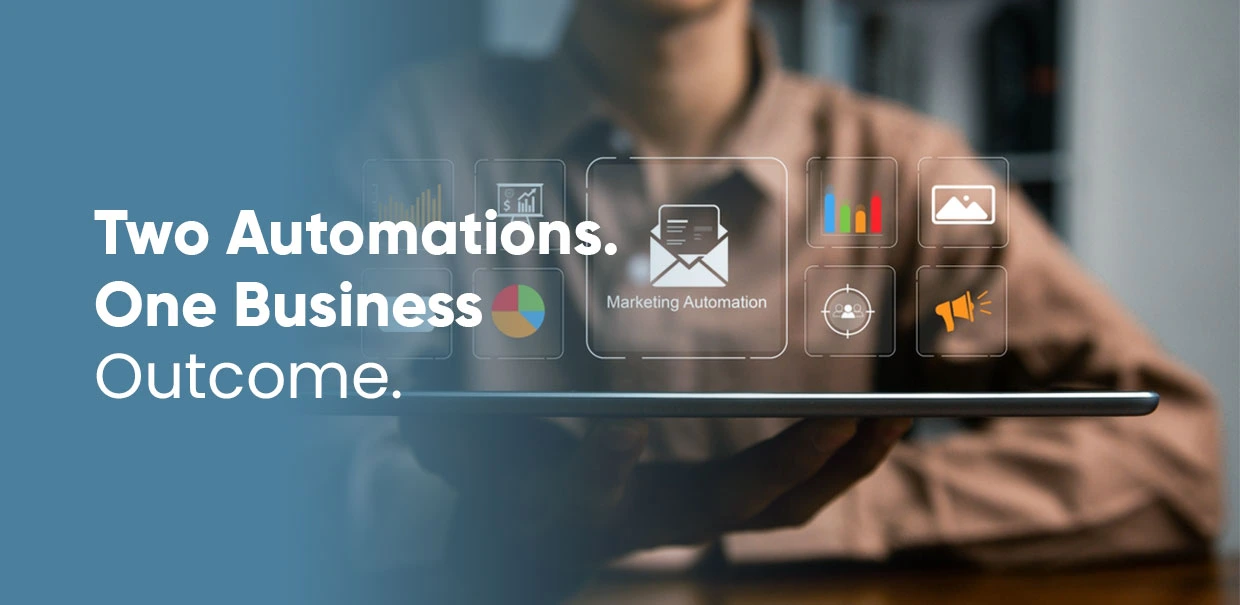
Marketing Automation vs Business Automation: Understanding the Difference
Businesses today face increasing pressure to improve efficiency, reduce manual work, and deliver exceptional customer experiences. As organizations embrace digital transformation, two technologies frequently come into the spotlight: marketing automation and business automation. Although these terms are often used interchangeably, they solve different business challenges and deliver value in unique ways.
Marketing automation focuses on automating customer-facing activities such as lead generation, email campaigns, customer segmentation, CRM workflows, and sales nurturing. In contrast, business automation streamlines internal operations like finance, procurement, HR, customer service, supply chain, manufacturing, and enterprise workflows.
Rather than competing technologies, marketing automation and business automation work best together. When integrated, they create connected workflows that improve productivity, accelerate decision-making, and enhance customer experiences across the organization. The rise of AI marketing automation has further expanded these capabilities by enabling predictive analytics, intelligent customer interactions, automated content generation, and AI-powered decision support.
Whether you’re a startup exploring marketing automation for small business, a growing company evaluating a marketing automation platform, or an enterprise looking to automate operations at scale, understanding the distinction between these approaches is essential for choosing the right automation strategy.
In this guide, we’ll explain how marketing automation differs from business automation, explore their benefits, compare their use cases, discuss the role of artificial intelligence, and help you determine when to use one or both to achieve sustainable business growth.
What Is Marketing Automation?
Marketing automation refers to the use of technology to automate repetitive marketing activities, improve customer engagement, and help businesses build stronger relationships with prospects and customers throughout the buying journey.
Instead of manually sending emails, updating customer records, assigning leads, or managing campaigns across multiple channels, businesses use a marketing automation platform to execute these activities automatically based on predefined rules and customer behavior.
Modern marketing automation combines customer data, CRM systems, email marketing, analytics, artificial intelligence, and omnichannel communication to deliver personalized experiences at scale. As businesses grow, automation becomes essential for managing larger customer databases while maintaining consistent engagement.
Many organizations partner with a marketing automation company to design, implement, and optimize these workflows, ensuring the technology aligns with their sales processes and business objectives.
For startups and growing organizations, marketing automation for small businesses provides a cost-effective way to automate lead management, improve campaign performance, and increase marketing ROI without requiring a large marketing team.
Key Features of Marketing Automation
A modern marketing automation solution typically includes:
- Email marketing automation
- Lead generation and lead nurturing
- Customer segmentation
- CRM integration
- Landing page and form automation
- Campaign management
- Social media scheduling
- Customer journey automation
- Marketing analytics and reporting
- AI-powered personalization
- Lead scoring
- Sales pipeline automation
These capabilities help marketing teams focus on strategy and customer engagement rather than repetitive administrative tasks.
Benefits of Marketing Automation
Organizations implement marketing automation because it delivers measurable improvements across the customer lifecycle.
Improved Lead Generation
Marketing automation captures, qualifies, and nurtures leads automatically, ensuring sales teams receive high-quality opportunities at the right time.
Personalized Customer Experiences
Automation platforms use customer behavior, preferences, and demographics to deliver personalized emails, recommendations, and content that increase engagement.
Higher Marketing ROI
Automated campaigns reduce manual effort, improve targeting, and optimize marketing spend, resulting in better conversion rates and improved return on investment.
Better Sales and Marketing Alignment
Marketing and sales teams work from shared customer data through CRM integrations, reducing communication gaps and improving lead handoffs.
Scalable Growth
As businesses expand, automation allows them to manage thousands of prospects and customers without proportionally increasing marketing resources.
Common Marketing Automation Use Cases
Marketing automation supports a wide range of customer-facing activities, including:
- Welcome email sequences
- Lead nurturing campaigns
- Newsletter automation
- Event registration workflows
- Webinar follow-ups
- Customer onboarding
- Cart abandonment reminders
- Re-engagement campaigns
- Customer feedback surveys
- Loyalty program communications
- Personalized product recommendations
- Cross-selling and upselling campaigns
For example, when a prospect downloads an eBook from your website, the system can automatically add the lead to your CRM, send a thank-you email, assign a lead score based on engagement, and notify a sales representative when the lead is ready for follow-up. This seamless process improves response times and increases the likelihood of conversion.
What Is Business Automation?
Business automation is the use of technology to automate repetitive, rule-based, and data-driven processes across an organization. Unlike marketing automation, which focuses on customer acquisition and engagement, business automation improves operational efficiency by streamlining workflows across departments such as finance, human resources, procurement, manufacturing, customer service, supply chain, and IT.
Business automation eliminates manual tasks, reduces errors, accelerates approvals, and enables employees to focus on strategic work instead of repetitive administrative activities.
Modern business automation combines technologies such as robotic process automation (RPA), workflow automation, artificial intelligence (AI), intelligent document processing (IDP), machine learning, and business process management (BPM) to create connected, scalable, and intelligent operations.
Organizations increasingly use business automation to build digital enterprises where systems communicate seamlessly, data flows automatically between departments, and routine decisions are handled with minimal human intervention.
Key Features of Business Automation
Business automation platforms commonly include:
- Workflow automation
- Process automation
- Robotic Process Automation (RPA)
- Intelligent document processing
- Business rules management
- Approval workflows
- ERP integration
- AI-powered decision support
- Digital forms
- Compliance monitoring
- Analytics and reporting
- End-to-end process orchestration
Benefits of Business Automation
Business automation helps organizations eliminate repetitive manual tasks, improve operational efficiency, and enable employees to focus on higher-value work. By automating workflows across departments, businesses can reduce costs, increase accuracy, and make faster, data-driven decisions.
1. Increased Operational Efficiency
Automating repetitive tasks such as data entry, approvals, invoice processing, and reporting significantly reduces processing time. Employees spend less time on administrative work and more time on strategic initiatives that drive business growth.
2. Lower Operational Costs
Manual processes require significant time and resources. Business automation reduces labor costs, minimizes rework caused by human errors, and optimizes resource utilization across departments.
3. Improved Accuracy and Compliance
Automated workflows follow predefined rules, reducing inconsistencies and ensuring compliance with internal policies and industry regulations. This is especially valuable in industries such as banking, healthcare, manufacturing, and pharmaceuticals.
4. Faster Decision-Making
Business automation provides real-time visibility into processes through dashboards and analytics. Decision-makers can monitor performance, identify bottlenecks, and take corrective actions quickly.
5. Better Customer Experience
Although business automation focuses on internal operations, customers benefit from faster order processing, quicker support responses, accurate billing, and shorter turnaround times.
6. Scalability
As organizations grow, manual processes become difficult to manage. Automation enables businesses to handle increasing workloads without significantly increasing headcount.
7. AI-Driven Business Intelligence
Modern automation platforms use artificial intelligence to identify patterns, predict outcomes, recommend actions, and continuously improve business processes.
Marketing Automation vs Business Automation: Which One Does Your Business Need?
The answer depends on your business goals.
Choose marketing automation if you want to:
- Generate more qualified leads
- Improve email marketing performance
- Personalize customer experiences
- Automate lead nurturing
- Increase conversion rates
- Improve campaign ROI
- Integrate marketing with CRM
Choose business automation if you want to:
- Reduce manual operational work
- Automate finance and HR processes
- Improve workflow efficiency
- Increase compliance
- Eliminate repetitive administrative tasks
- Improve employee productivity
- Scale operations efficiently
For most growing organizations, the best strategy is to implement both. Marketing automation drives demand and customer engagement, while business automation ensures the organization can efficiently fulfill that demand.
Can Marketing Automation and Business Automation Work Together?
Absolutely.
The most successful organizations don’t choose one over the other, they integrate both to create connected, end-to-end business processes.
Consider the following example:
Step 1: Marketing Generates a Lead
A potential customer downloads an eBook, fills out a contact form, or requests a demo through your website.
Step 2: Marketing Automation Takes Over
The marketing automation platform:
- Sends a welcome email
- Scores the lead
- Segments the contact
- Starts a personalized nurturing campaign
- Updates the CRM automatically
Step 3: Sales Engagement
Once the lead reaches a predefined score:
- A sales representative is notified
- A meeting is scheduled
- Opportunity details are recorded in the CRM
Step 4: Business Automation Begins
After the deal is won:
- Customer onboarding starts automatically
- Contracts are generated
- Finance creates invoices
- Procurement receives project requirements
- HR allocates resources
- Project workflows are initiated
Step 5: AI Optimizes the Process
Artificial intelligence continuously
- Predicts customer behavior
- Identifies sales opportunities
- Detects workflow bottlenecks
- Recommends process improvements
- Generates business insights
This integrated approach eliminates manual handoffs, reduces delays, and creates a seamless experience for both customers and employees.
Real-World Example: Marketing Automation and Business Automation Working Together
Imagine a manufacturing company launching a new product.
Marketing Automation
The marketing team:
- Launches targeted email campaigns
- Runs LinkedIn advertisements
- Tracks visitor behavior
- Scores leads automatically
- Schedules follow-up emails
- Assigns qualified leads to sales representatives
Business Automation
Once a customer places an order:
- A sales order is created automatically
- Inventory availability is verified
- Production planning begins
- Procurement requests raw materials
- Finance generates invoices
- Logistics schedules shipment
- Customer receives automated status updates
By integrating both systems, the company reduces delays, improves customer satisfaction, and accelerates revenue generation.
Industry Use Cases: How Marketing Automation and Business Automation Drive Growth
While the core principles of automation remain the same, every industry has unique workflows and business challenges. Combining marketing automation, business automation, and AI enables organizations to improve efficiency, deliver better customer experiences, and make smarter business decisions.
Manufacturing
Manufacturers manage complex operations involving production planning, procurement, inventory, quality control, and customer communication.
Marketing Automation Use Cases
- Lead generation for industrial products
- Email campaigns for distributors and partners
- Product launch campaigns
- Webinar invitations
- Customer engagement tracking
- Dealer communication
Business Automation Use Cases
- Production scheduling
- Inventory management
- Purchase order approvals
- Vendor onboarding
- Quality inspection workflows
- Maintenance scheduling
- Invoice processing
BFSI (Banking, Financial Services & Insurance)
Financial institutions process thousands of transactions and customer requests daily while maintaining strict regulatory compliance.
Marketing Automation
- Personalized financial product campaigns
- Loan eligibility campaigns
- Customer onboarding emails
- Investment newsletters
- Cross-selling and upselling
Business Automation
- Loan approval workflows
- KYC verification
- Claims processing
- Fraud detection
- Compliance reporting
- Customer service ticket routing
Healthcare
Healthcare providers require secure, compliant, and efficient workflows while maintaining exceptional patient care.
Marketing Automation
- Appointment reminders
- Health awareness campaigns
- Patient education emails
- Wellness program promotions
- Feedback collection
Business Automation
- Patient registration
- Medical record management
- Insurance claim processing
- Billing automation
- Laboratory workflows
Retail & E-commerce
Retail organizations compete by delivering personalized shopping experiences while managing inventory and supply chains efficiently.
Marketing Automation
- Personalized product recommendations
- Cart abandonment emails
- Loyalty campaigns
- Seasonal promotions
- Customer segmentation
Business Automation
- Inventory replenishment
- Order processing
- Warehouse workflows
- Returns management
- Supplier communication
Logistics & Supply Chain
Supply chain organizations require real-time visibility and seamless coordination across multiple stakeholders.
Marketing Automation
- Customer communication
- Shipment notifications
- Service announcements
- Customer satisfaction surveys
Business Automation
- Shipment tracking
- Fleet scheduling
- Warehouse automation
- Route optimization
- Customs documentation
- Delivery delay prediction
Pharmaceutical Industry
Pharmaceutical companies must balance innovation, compliance, manufacturing, and customer engagement.
Marketing Automation
- Healthcare professional engagement
- Educational campaigns
- Product awareness
- Event promotion
Business Automation
- Regulatory documentation
- Clinical trial workflows
- Manufacturing approvals
- Inventory management
- Compliance reporting
The Role of AI Marketing Automation
Traditional marketing automation relies on predefined workflows and rules. AI marketing automation goes a step further by using machine learning, predictive analytics, and generative AI to make smarter decisions and deliver more personalized customer experiences.
Instead of sending the same email to every prospect, AI analyzes customer behavior, preferences, and engagement history to determine:
- Which content should be delivered
- When emails should be sent
- Which leads are most likely to convert
- Which products should be recommended
- Which campaigns require optimization
Benefits of AI Marketing Automation
- Personalized customer journeys
- AI-generated email content
- Predictive lead scoring
- Customer behavior analysis
- Campaign optimization
- Automated audience segmentation
- Intelligent chatbots
- AI-powered recommendations
- Better conversion rates
- Higher marketing ROI
As AI technologies continue to evolve, businesses are shifting from simple rule-based automation to intelligent, adaptive automation that continuously learns and improves.
How AI Enhances Business Automation
Artificial intelligence is transforming business automation by enabling systems to make decisions, interpret unstructured data, and automate complex workflows.
Examples include:
- AI-powered invoice processing
- Intelligent document processing
- Automated claims management
- Fraud detection
- Predictive maintenance
- Supply chain optimization
- AI-based workforce planning
- Smart procurement
- Customer support automation
- Intelligent workflow orchestration
Rather than simply following predefined rules, AI-powered automation can learn from historical data, identify anomalies, and recommend the next best actions.
Marketing Automation + Business Automation + AI = Intelligent Enterprise
Modern enterprises increasingly combine all three capabilities.
Marketing Automation
- Generates demand
- Engages customers
- Nurtures leads
Business Automation
- Executes business processes
- Eliminates manual work
- Improves operational efficiency
Artificial Intelligence
- Predicts outcomes
- Makes recommendations
- Automates decision-making
- Continuously optimizes processes
Together, these technologies create an intelligent enterprise capable of responding faster to market changes, improving customer experiences, and scaling operations efficiently.
Key Takeaways
Before selecting an automation strategy, keep these important points in mind:
- Marketing automation focuses on customer acquisition, engagement, and lead nurturing.
- Business automation improves operational efficiency across departments.
- AI enhances both by enabling intelligent decision-making and predictive insights.
- CRM integration creates a connected customer journey from marketing to sales and service.
- Small businesses can benefit from automation just as much as large enterprises.
- Combining marketing automation and business automation provides greater long-term business value than implementing either in isolation.
- A well-planned automation strategy helps organizations improve productivity, reduce costs, and accelerate digital transformation.
Conclusion
Marketing automation and business automation are not competing technologies—they are complementary solutions that address different aspects of business growth. Marketing automation helps organizations attract prospects, nurture leads, and build lasting customer relationships, while business automation streamlines internal operations, improves efficiency, and reduces manual effort across departments.
The addition of AI marketing automation has transformed both disciplines by enabling predictive analytics, intelligent personalization, automated decision-making, and continuous optimization. Businesses that integrate AI with marketing automation, CRM, and enterprise workflows are better positioned to respond to changing customer expectations and scale efficiently.
Whether you’re evaluating marketing automation for small businesses, selecting a marketing automation platform, partnering with a marketing automation company, or searching for the best CRM for small businesses, the most successful approach is to build a connected automation ecosystem rather than investing in isolated tools.
Organizations that align marketing, sales, operations, and AI within a unified automation strategy gain a competitive advantage through improved customer experiences, higher productivity, and data-driven decision-making. As automation technologies continue to evolve, businesses that embrace intelligent automation today will be better prepared for tomorrow’s digital economy.
Frequently Asked Questions
1. What is the difference between marketing automation and business automation?
Marketing automation focuses on automating customer-facing activities such as lead generation, email campaigns, customer segmentation, and customer engagement. Business automation streamlines internal workflows across departments like HR, finance, procurement, operations, customer support, and manufacturing.
2. Can marketing automation and business automation work together?
Yes. Marketing automation generates and nurtures leads, while business automation manages operational processes after a lead becomes a customer. Integrating both systems creates a seamless workflow from lead generation to customer onboarding, service delivery, invoicing, and ongoing support.
3. What is a marketing automation platform?
A marketing automation platform is software that automates repetitive marketing activities, including email campaigns, lead nurturing, customer segmentation, campaign management, CRM integration, and performance analytics. It helps businesses deliver personalized customer experiences while improving marketing efficiency.
4. Why is marketing automation important for small businesses?
Marketing automation for small businesses enables startups and growing companies to automate lead management, email marketing, follow-ups, and customer communication without increasing headcount. It improves productivity, enhances customer relationships, and delivers better marketing ROI.
5. How do I choose the best CRM for small businesses?
The best CRM for small businesses should provide contact management, lead tracking, sales pipeline visibility, workflow automation, marketing automation integration, reporting dashboards, mobile access, and AI-powered insights. It should also be easy to scale as your business grows.
6. Is automation only suitable for large enterprises?
No. Small and medium-sized businesses can also benefit from automation. Many cloud-based solutions offer affordable and scalable options, making it easier for growing businesses to automate marketing, sales, customer service, finance, and operational workflows.
7. How does AI improve business automation?
Artificial intelligence enhances business automation by enabling predictive analytics, intelligent document processing, automated decision-making, anomaly detection, workflow optimization, and conversational AI. Instead of simply following predefined rules, AI-powered systems continuously learn and improve over time.
8. Should businesses invest in marketing automation or business automation first?
The answer depends on your business priorities. If your goal is to generate more leads and improve customer engagement, marketing automation should be the first investment. If your organization struggles with manual operations, process inefficiencies, or compliance challenges, business automation may deliver faster operational benefits. Many organizations ultimately adopt both for maximum business impact.
9. What is the future of marketing and business automation?
The future lies in intelligent automation powered by AI, predictive analytics, Agentic AI, autonomous workflows, and integrated enterprise platforms. Organizations will increasingly connect marketing automation, CRM, ERP, workflow automation, and AI to create seamless, data-driven operations.

 Sep 22, 2026

