

Leveraging Automation & AI to Mitigate the H-1B Visa Crisis
 Jan 19,2026
 By Priyanka Shinde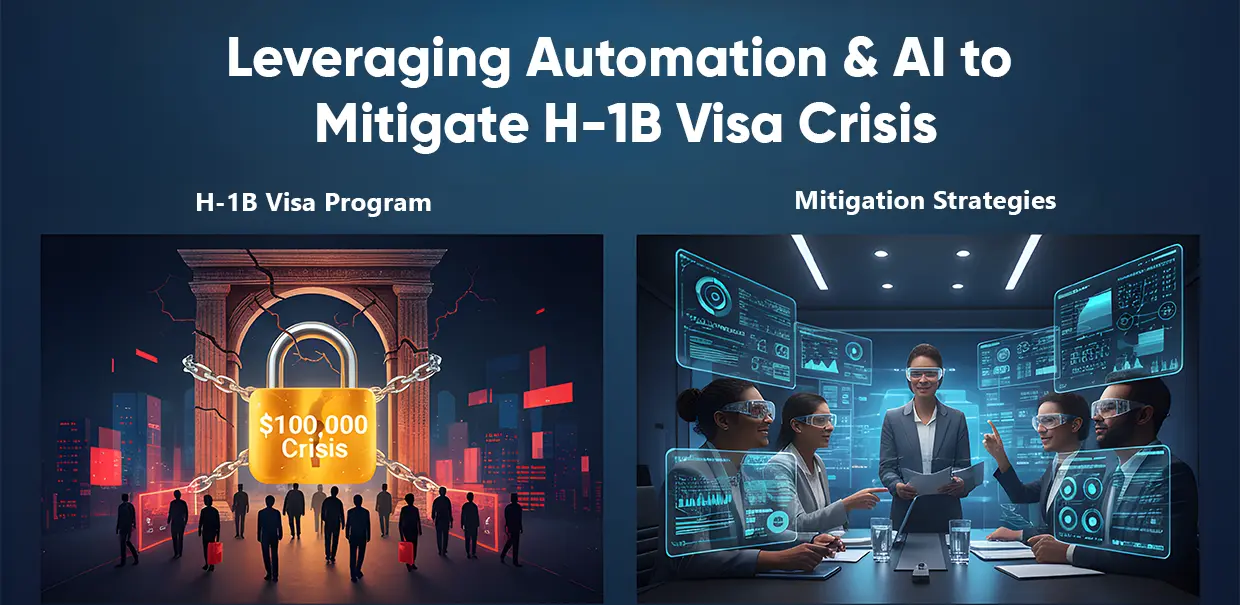
The United States has long relied on the H-1B visa program to bring in highly skilled professionals, particularly in technology, engineering, and healthcare. However, in recent years, the H-1B visa process has become more competitive, more expensive, and increasingly uncertain. This ongoing H-1B visa crisis is creating significant challenges for businesses that depend on specialized global talent.
The rising H-1B visa fee increase, limited visa quotas, and the widening skills gap have left many organizations grappling with how to meet their workforce needs. While the demand for tech talent continues to rise, the supply is restricted, leading companies to seek alternative strategies. One emerging solution lies in leveraging Automation and Artificial Intelligence (AI), not as a replacement for human talent but as a way to bridge the gap and maintain operational efficiency.
Understanding the H-1B Visa Crisis
Before exploring how automation and AI can help, it’s important to understand the scale of the current H-1B visa challenges.
- How many H-1B visas per year?
The U.S. government caps the number of new H-1B visas at 65,000 annually, with an additional 20,000 visas reserved for applicants holding advanced degrees from U.S. institutions. This brings the total to 85,000 per year. However, demand has consistently outstripped supply, with hundreds of thousands of applicants entering the lottery system each year. - H-1B visa fee increase: Old vs. New
In 2025, businesses applying for H-1B visas are facing significant fee increases. Specifically pertaining to per-petition fee, which was $0 until now, but for the new H-1B petitions employers are expected to pitch-in $100,000 as one-time fee. Employers also face steep increases in other related fees, including Form I-129. These rising costs, when multiplied across multiple visa petitions, can become a financial burden for companies, particularly startups and mid-sized firms.
This combination of limited visa availability and higher costs is putting companies in a difficult position. The shortage of international talent is leaving roles unfilled, stalling innovation, and adding pressure to already stretched workforces.
The Impact on Businesses
The H-1B visa crisis is more than just a talent issue; it’s a business continuity challenge. Companies struggling to secure the right talent are facing delays in product launches, gaps in research and development, and higher labor costs as they compete for a smaller pool of available employees.
Moreover, industries such as IT services, software development, data science, and engineering, all heavily reliant on H-1B visa holders, are particularly vulnerable. If businesses cannot adapt quickly, they risk losing their competitive edge in a global economy that is advancing at breakneck speed.
Why Automation and AI Can be the Answer
While businesses cannot directly control the visa lottery or federal policies, they can adapt their internal operations. This is where Automation and AI come into play. Far from being a replacement for human talent, these technologies act as force multipliers, allowing companies to bridge the possible talent gap created by this H-1B visa crisis. This way the existing teams get the breathing room they need for more important aspects of businesses like innovation, connection, and growth; while the enterprises get the bandwidth to plan and execute other measures of hiring the right talent.
1. Streamlining Everyday Workflows Amid Visa Shortages
With the cap on H-1B visas and rising application costs, many businesses are struggling to bring in professionals who usually handle routine tasks like data entry, compliance checks, or reporting. Automation tools can step in temporarily to manage these repetitive processes, ensuring business continuity. Importantly, this doesn’t eliminate the need for fresh talent; rather, it helps organizations stay afloat until they can secure the right hires through the visa system or domestic recruitment.
2. Assisting Teams Affected by H-1B Constraints
For sectors like technology and healthcare, where many roles are traditionally filled by H-1B workers, the shortage creates workload strain on existing staff. AI-powered assistants like coding copilots or research bots can help ease that burden. They act as support systems that enable smaller teams to achieve more without being overwhelmed. These tools are not substitutes for highly skilled professionals but bridges that allow businesses to operate efficiently until they can onboard new talent.
3. Enabling Global Collaboration Beyond Borders
When businesses cannot bring enough H-1B workers onshore, they often rely on offshore or distributed teams. Here, automation and AI play a supportive role; from project management platforms that coordinate across time zones to real-time translation tools that reduce communication barriers, it addresses them all. By making global collaboration smoother, these technologies ensure that critical work continues, even when the operations are impacted by visa constraints.
While we let this sink in, let’s understand the possible adaptations at a larger level in enterprises.
Real-World Business Adaptations
Several U.S.-based companies are already shifting strategies to adapt to this crisis. Let’s have a look.
- Tech startups are adopting AI-driven customer support chatbots to reduce their reliance on international call center staff.
- Software firms are implementing robotic process automation (RPA) to handle repetitive quality assurance tasks, lessening the pressure on hiring additional developers.
- Healthcare providers, traditionally dependent on international professionals, are deploying AI diagnostic tools and automation systems to support limited staff.
These adaptations do not eliminate the need for skilled professionals, but they provide organizations with a buffer, reducing the urgency and cost pressures created by the H-1B visa limitations.
Balancing Automation with Human Talent
It’s essential to emphasize that automation and AI are not substitutes for human expertise. Creativity, innovation, problem-solving, and leadership remain firmly human qualities. However, by automating repetitive and time-consuming tasks, businesses can focus their limited human resources on areas that truly drive growth.
In the long term, a hybrid model, where AI handles efficiency-driven processes and humans focus on innovation and strategy, is likely to become the standard for many industries.
The H-1B visa crisis is not going away anytime soon. With rising visa fees, limited visa allocations per year, and ongoing political debates around immigration policy, businesses must take proactive measures. Automation and AI represent a pragmatic, forward-thinking response that can help companies weather this storm while continuing to innovate.
Organizations that embrace these technologies now will be better positioned to stay competitive, reduce costs, and build resilience, even in the face of workforce shortages.
The US economy thrives on innovation, and much of that innovation has historically come from skilled immigrants through the H-1B program. But as the program faces mounting challenges, businesses cannot afford to wait for policy changes alone.
By strategically investing in automation and artificial intelligence, companies can not only mitigate the immediate talent crisis but also lay the foundation for a more resilient future. In doing so, they acknowledge a critical truth: while machines cannot replace human ingenuity, they can empower it, and that may be the key to navigating the uncertainties of the modern talent landscape.

 Sep 22, 2026

