


How Retail Automation Reduces Operational Costs at Scale
 Feb 06,2026
 By Priyanka Shinde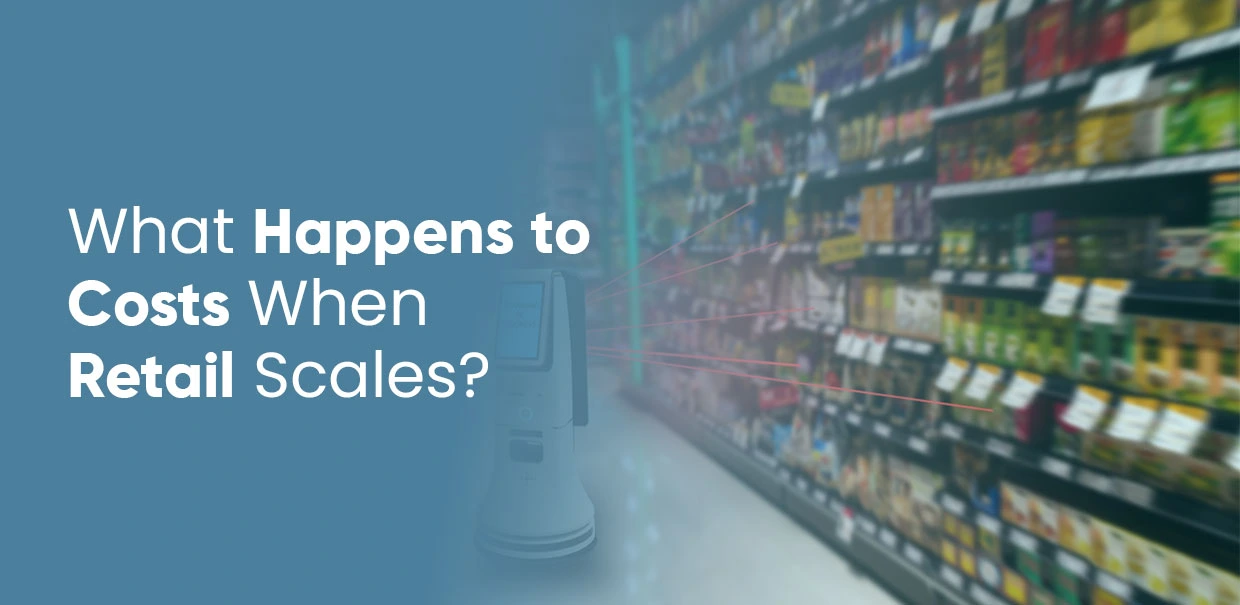
In today’s hyper-competitive retail environment, profit margins are shrinking while customer expectations continue to rise. Shoppers demand faster deliveries, personalized experiences, real-time inventory visibility, and seamless omnichannel journeys. Meeting these demands manually is no longer sustainable.
As a result, retailers are actively exploring top retail automation solutions companies and trusted retail automation systems providers to modernize their operations, reduce overhead costs, and build scalable, future-ready business models.
This is where intelligent retail systems step in, not just as a technology upgrade, but as a strategic shift in how modern retailers operate, scale, and compete.
Understanding Intelligent Retail Systems in the Modern Era
Intelligent retail systems refer to the use of intelligent technologies, such as AI, robotics, RPA (Robotic Process Automation), IoT, and advanced analytics, to streamline and manage retail processes with minimal human intervention.
These technologies are now powering:
- Inventory replenishment
- Order fulfillment
- Customer support
- Pricing optimization
- Demand forecasting
- Workforce scheduling
In short, automation enables retailers to do more with less: less manual effort, less waste, and fewer costly mistakes.
The True Cost Burden of Traditional Retail Operations
Before understanding how automation saves money, it’s important to see where traditional retail operations lose it.
Common Cost Drains in Manual Retail Systems
- Excess labor expenses
- Inventory overstocking and stockouts
- High return rates
- Billing and invoicing errors
- Inefficient warehouse layouts
- Slow decision-making
- Poor demand forecasting
These inefficiencies may seem manageable at a small scale. But when operations expand across multiple stores, regions, or channels, these costs multiply rapidly.
AI-driven retail platforms systematically identify these hidden leaks.
How Retail Automation Drives Cost Reduction at Scale
1. Workforce Optimization and Labor Cost Savings
Labor is one of the largest operational expenses in retail. Automation reduces dependency on repetitive manual work and allows staff to focus on high-value activities.
Key Benefits:
- Automated checkout systems reduce cashier staffing needs
- AI scheduling minimizes overstaffing and understaffing
- Chatbots handle routine customer queries
- RPA manages back-office documentation
Instead of replacing employees, automation reallocates human talent to strategic roles, improving productivity per employee and lowering cost per transaction.
2. Inventory Intelligence and Waste Reduction
Inventory mismanagement is a silent profit killer. Overstocking ties up capital. Stockouts drive customers away. Manual tracking fails at scale.
AI-driven retail platforms solve this through real-time visibility and predictive analytics.
How It Works:
- IoT sensors monitor shelf availability
- AI forecasts demand using historical data
- Automated replenishment triggers restocking
- RFID tracks product movement
Cost Impact:
- Reduced dead stock
- Lower storage costs
- Fewer emergency restocks
- Improved cash flow
Over time, optimized inventory management can save retailers millions of dollars annually.
3. Faster Order Processing and Fulfillment Efficiency
Order processing involves multiple stages: validation, picking, packing, shipping, and tracking. Manual handling introduces delays and errors.
Automation accelerates each step.
Automation Tools in Fulfillment:
- Robotic picking systems
- Automated sorting conveyors
- AI route optimization
- Smart packaging systems
Result:
- Lower per-order handling cost
- Reduced delivery failures
- Faster shipping times
- Higher customer retention
For large retailers, even saving a few seconds per order can translate into massive cost savings at scale.
4. Data-Driven Decision Making
Manual reporting often relies on outdated spreadsheets and fragmented data. This hinders strategic decision-making and results in missed opportunities.
Automation centralizes and analyzes data in real time.
Examples:
- Dynamic pricing adjustments
- Regional demand forecasting
- Promotion performance analysis
- Customer behavior modeling
With automated analytics, retailers avoid costly trial-and-error strategies and make smarter investments.
5. Reduction in Human Errors and Compliance Risks
Human errors in billing, accounting, inventory entries, and reporting can cause financial losses and compliance issues.
Retail automation standardizes workflows.
Benefits:
- Automated invoicing reduces billing mistakes
- Digital audit trails simplify compliance
- RPA ensures consistent data entry
- AI detects anomalies early
This not only reduces direct financial losses but also protects brand reputation.
The Strategic Role of Retail Automation in Business Scaling
Scaling retail operations manually increases complexity exponentially. Automation allows businesses to grow without proportional increases in cost.
Why Automation Supports Scalable Growth
- One automated system can support hundreds of locations
- Centralized control reduces management overhead
- Cloud-based platforms enable rapid expansion
- Standardized processes ensure consistency
As retailers expand geographically or digitally, automation ensures stability and predictability.
Keywords Integration: Core Focus Areas in Modern Retail
Successful digital retailers focus on a structured approach that includes:
- Retail automation
- Optimize retail operations
- Retail workflow management
- Automation in the retail industry
These pillars work together to reduce friction, control costs, and enhance operational visibility across departments.
How to Implement Retail Operations Automation Successfully
Step 1: Audit Your Current Operations
Identify bottlenecks in inventory, staffing, logistics, and customer service.
Step 2: Prioritize High-Impact Areas
Start with processes that consume the most time and money.
Step 3: Choose Scalable Platforms
Select cloud-based, AI-enabled solutions that integrate easily.
Step 4: Train Your Workforce
Ensure employees understand and embrace automation tools.
Step 5: Measure and Optimize Continuously
Track KPIs and refine workflows regularly.
Automation is not a one-time project; it’s an evolving strategy.
Why Retail Automation Improves Customer Experience
Happy customers cost less to serve.
Automation improves:
- Order accuracy
- Delivery speed
- Product availability
- Personalization
- Support responsiveness
When customers are satisfied, return rates drop, complaints decline, and lifetime value increases, reducing acquisition and retention costs.
The Future of Cost-Efficient Retail Operations
Over the next decade, retail operations automation will become even more intelligent with:
- Autonomous stores
- Hyper-personalized AI assistants
- Predictive supply chains
- Voice-driven inventory systems
- Self-healing IT infrastructure
Retailers who adopt early will enjoy long-term cost leadership.
Those who delay risk falling behind.
Conclusion: Automation Is No Longer Optional
Retail process automation is no longer about convenience; it’s about survival and scalability.
By streamlining workflows, eliminating inefficiencies, improving accuracy, and empowering employees, automation transforms cost structures from reactive to proactive.
In an industry where margins are thin and competition is fierce, automated operations are the foundation of sustainable growth.
If your goal is to reduce operational costs without compromising quality, retail process automation is your most powerful ally.
FAQs
What is retail automation?
Retail automation refers to using AI, robotics, software, and connected systems to manage retail operations with minimal human intervention.
How does retail automation reduce operational costs?
It reduces labor dependency, minimizes inventory waste, prevents errors, accelerates fulfillment, and improves decision-making through data analytics.
Is retail automation suitable for small and mid-sized retailers?
Yes. Cloud-based and modular automation solutions allow smaller retailers to scale gradually without heavy upfront investments.
What areas benefit most from automation in retail?
Inventory management, order fulfillment, customer support, pricing, workforce scheduling, and reporting benefit the most.
How long does it take to see ROI from retail automation?
Most retailers start seeing measurable ROI within 6 to 18 months, depending on implementation scale and complexity.
Does automation replace retail jobs?
No. It shifts employees from repetitive tasks to higher-value roles like customer engagement, analytics, and strategy.

 Sep 22, 2026

