


AI in Logistics and Supply Chain: The Complete Enterprise Guide 2026
 Feb 26,2026
 By Priyanka Shinde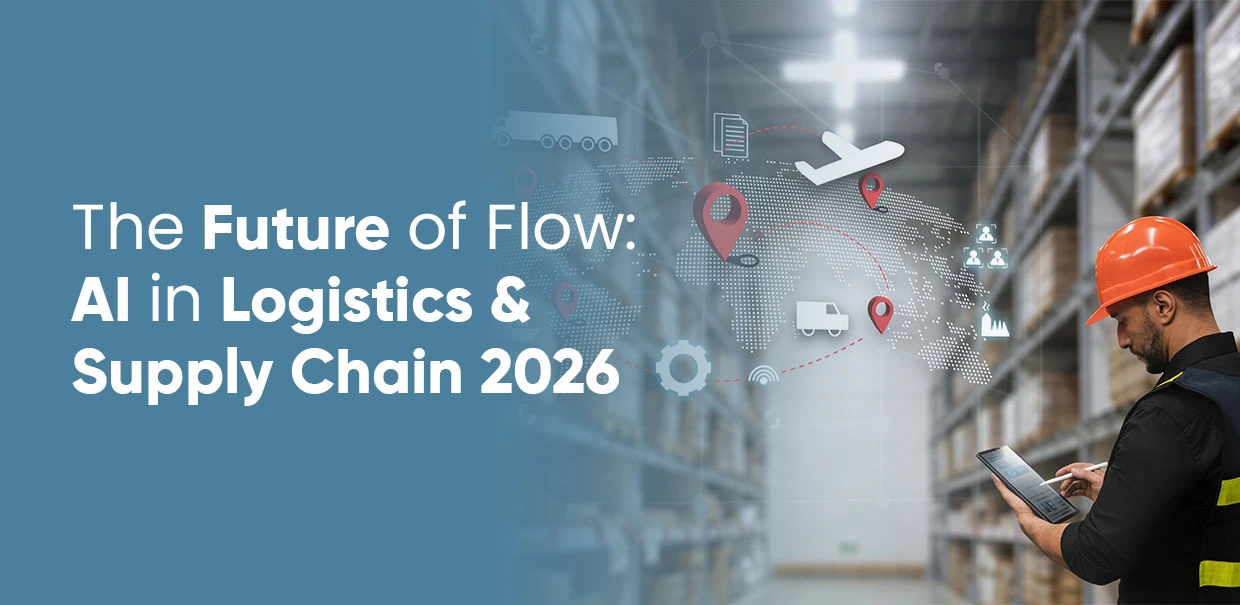
The logistics and supply chain industry has always been a complex web of moving parts, suppliers, warehouses, fleets, ports, customs, retailers, and customers. For decades, companies relied on spreadsheets, manual forecasting, and reactive decision-making to keep operations running. But today, that model simply doesn’t scale.
Artificial intelligence is changing the game.
If you’re looking for a deeper strategic roadmap, explore our comprehensive resource, AI in Logistics and Supply Chain: The Complete Enterprise Guide 2026, where we break down enterprise-level implementation frameworks and ROI models.
From predictive demand planning to autonomous delivery systems, AI in logistics and supply chains is no longer experimental; it’s operational. Companies that once struggled with delayed shipments, excess inventory, and rising transportation costs are now using intelligent systems to optimize decisions in real time.
If you’ve been wondering how artificial intelligence is transforming logistics, this blog will walk you through the most impactful changes happening right now, along with benefits, real-world examples, trends, and what the future holds.
Why AI Matters More Than Ever in Logistics
Global supply chains are more fragile and interconnected than ever. Geopolitical tensions, labor shortages, fuel volatility, e-commerce growth, and customer expectations for same-day delivery have forced businesses to rethink how they operate.
Traditional systems react. AI predicts.
The difference? Billions in savings and a significant competitive advantage.
Industry reports show that companies implementing AI-driven supply chain solutions can reduce logistics costs by up to 15%, improve service levels by 10–20%, and reduce inventory levels by 20–30%.
Now let’s explore the seven most powerful ways AI is driving this transformation.
1. Predictive Demand Forecasting with Higher Accuracy
One of the biggest pain points in supply chain management is inaccurate demand forecasting. Overestimate demand and you’re stuck with excess stock. Underestimate it, and you lose sales.
AI-powered forecasting models analyze:
- Historical sales data
- Seasonal patterns
- Market trends
- Weather data
- Economic indicators
- Social sentiment
Unlike traditional statistical models, AI systems continuously learn and adjust predictions in real time.
For example, companies like Amazon use machine learning algorithms to forecast demand across millions of SKUs globally. This enables optimized inventory placement closer to customers, reducing delivery time and transportation costs.
Impact:
- Reduced stockouts
- Lower overstock and dead inventory
- Improved cash flow
2. Intelligent Inventory Optimization
Inventory is capital. And idle inventory is frozen capital.
AI systems dynamically balance stock levels across warehouses based on predicted demand, supplier lead times, and transportation availability. Instead of static reorder points, businesses now use adaptive algorithms.
Retailers and manufacturers leverage AI-driven inventory management platforms to:
- Automatically trigger replenishment
- Identify slow-moving items
- Optimize warehouse allocation
- Minimize safety stock
This is where AI in supply chain operations becomes deeply strategic. Companies are moving from reactive replenishment to predictive inventory orchestration.
Result: Higher service levels with lower carrying costs.
3. Smart Route Optimization and Fleet Management
Transportation often accounts for 40–60% of total logistics costs. AI is dramatically improving route planning and fleet utilization.
AI-powered systems analyze:
- Real-time traffic
- Fuel consumption patterns
- Weather disruptions
- Driver availability
- Delivery time windows
Companies like UPS implemented AI-driven route optimization systems that reportedly save millions of gallons of fuel annually by reducing unnecessary miles.
With AI-enabled fleet management, businesses can:
- Reduce fuel costs
- Improve on-time deliveries
- Lower carbon emissions
- Predict vehicle maintenance needs
This isn’t just operational efficiency; it’s sustainability in action.
4. Warehouse Automation and Robotics
Warehouses are becoming smarter, faster, and more autonomous.
AI-driven robotics can:
- Pick and pack orders
- Sort parcels
- Manage pallet movements
- Conduct inventory counts using computer vision
Organizations like DHL have integrated AI-powered robotics and computer vision systems to improve accuracy and reduce manual errors.
Benefits include:
- Faster order fulfillment
- Reduced labor costs
- Fewer human errors
- 24/7 operational capability
As labor shortages increase globally, AI-powered warehouse automation is becoming less optional and more essential.
5. Real-Time Supply Chain Visibility
One of the most transformative aspects of AI in logistics is end-to-end visibility.
Modern AI platforms integrate data from:
- IoT sensors
- GPS tracking
- Shipping carriers
- ERP systems
- Port authorities
By analyzing these data streams in real time, AI systems provide predictive alerts for delays, bottlenecks, and disruptions.
For example, Maersk uses AI analytics to optimize container movements and anticipate port congestion.
This level of visibility allows companies to:
- Reroute shipments proactively
- Communicate delays to customers instantly
- Reduce disruption costs
- Improve trust and transparency
6. Risk Management and Disruption Prediction
Recent global events exposed how vulnerable supply chains can be.
AI tools now monitor global news, weather events, political instability, and supplier risks to predict potential disruptions before they escalate.
Machine learning models can:
- Identify high-risk suppliers
- Predict delays due to weather or strikes
- Recommend alternative sourcing options
- Simulate “what-if” disruption scenarios
This predictive capability transforms supply chains from reactive firefighting to proactive resilience planning.
In industries like pharmaceuticals and automotive manufacturing, this shift can prevent millions in lost revenue.
7. Autonomous and Last-Mile Delivery Innovation
The final mile is often the most expensive and complex part of logistics.
AI is powering innovations such as the following:
- Autonomous delivery vehicles
- Drone-based delivery systems
- Smart delivery scheduling
- Dynamic last-mile routing
Companies like FedEx are experimenting with AI-enabled delivery systems to enhance speed and reduce operational costs.
As urbanization increases and e-commerce grows, AI-driven last-mile optimization will become even more critical.
Key Benefits of AI in Logistics and Supply Chain
Implementing AI solutions delivers measurable advantages:
1. Cost Reduction
- Lower fuel consumption
- Optimized warehouse space
- Reduced labor expenses
2. Improved Decision-Making
AI analyzes vast datasets instantly, supporting executives with data-backed insights instead of intuition.
3. Faster Delivery and Better Customer Experience
Customers expect real-time tracking and accurate ETAs. AI makes this possible.
4. Increased Agility
Businesses can adapt quickly to demand shifts or supply disruptions.
5. Sustainability Improvements
AI optimizes routes and inventory, reducing waste and emissions.
Emerging Trends in AI in Logistics
The evolution is accelerating. Here are some key trends shaping the industry:
1. Generative AI for Supply Chain Planning
Advanced AI models are being used to simulate multiple supply chain scenarios and recommend optimized strategies.
2. AI + IoT Integration
Connected devices feed AI models with real-time data for hyper-accurate decision-making.
3. Digital Twins
Companies are creating virtual replicas of supply chains to test strategies before implementing them in the real world.
4. Sustainable AI Logistics
AI tools are increasingly optimized to reduce carbon footprint and comply with ESG regulations.
Real-World Use Cases and Statistics
- AI-based route optimization can reduce transportation costs by up to 10–15%.
- AI-driven demand forecasting improves forecast accuracy by 20–50%.
- Warehouse robotics powered by AI can increase picking efficiency by up to 30–40%.
- Predictive maintenance systems can reduce equipment downtime by 30%.
Organizations investing in AI in logistics report faster ROI compared to traditional automation technologies because AI adapts and learns continuously.
The Future of AI in Logistics and Supply Chain
The future is autonomous, predictive, and intelligent.
In the next five to ten years, we can expect:
- Fully autonomous warehouses
- Self-optimizing global supply networks
- AI-powered procurement negotiations
- Real-time global supply chain digital twins
- Human-AI collaborative decision ecosystems
Rather than replacing human professionals, AI will augment decision-makers—handling complex data analysis while leaders focus on strategy.
The companies that embrace AI early will build resilient, scalable, and customer-centric supply chains.
Final Thoughts
The logistics and supply chain industry is undergoing one of the most significant technological shifts in its history. AI is not just improving operations, it’s redefining them.
From predictive forecasting to autonomous delivery, AI is building smarter, more resilient supply networks capable of handling modern global challenges.
Businesses that leverage AI strategically will reduce costs, increase agility, and deliver superior customer experiences.
The real question isn’t whether to adopt AI.
It’s how fast you can implement it before your competitors do.
FAQs
1. How is AI used in logistics?
AI is used for demand forecasting, route optimization, warehouse automation, predictive maintenance, real-time tracking, and disruption management.
2. What are the main benefits of AI in supply chain management?
AI reduces costs, improves forecasting accuracy, enhances visibility, minimizes risk, and increases operational efficiency.
3. Is AI replacing human workers in logistics?
AI automates repetitive tasks but enhances human decision-making. Most implementations combine AI tools with skilled professionals.
4. How does AI improve supply chain visibility?
AI integrates data from sensors, carriers, and ERP systems to provide real-time tracking and predictive alerts for disruptions.
5. What is the future of AI in logistics?
The future includes autonomous warehouses, predictive digital twins, and fully optimized self-learning supply networks.

 Sep 22, 2026

