

8 Proven Ways Pricing Automation Reduces Revenue Leakage
 Feb 20,2026
 By Priyanka Shinde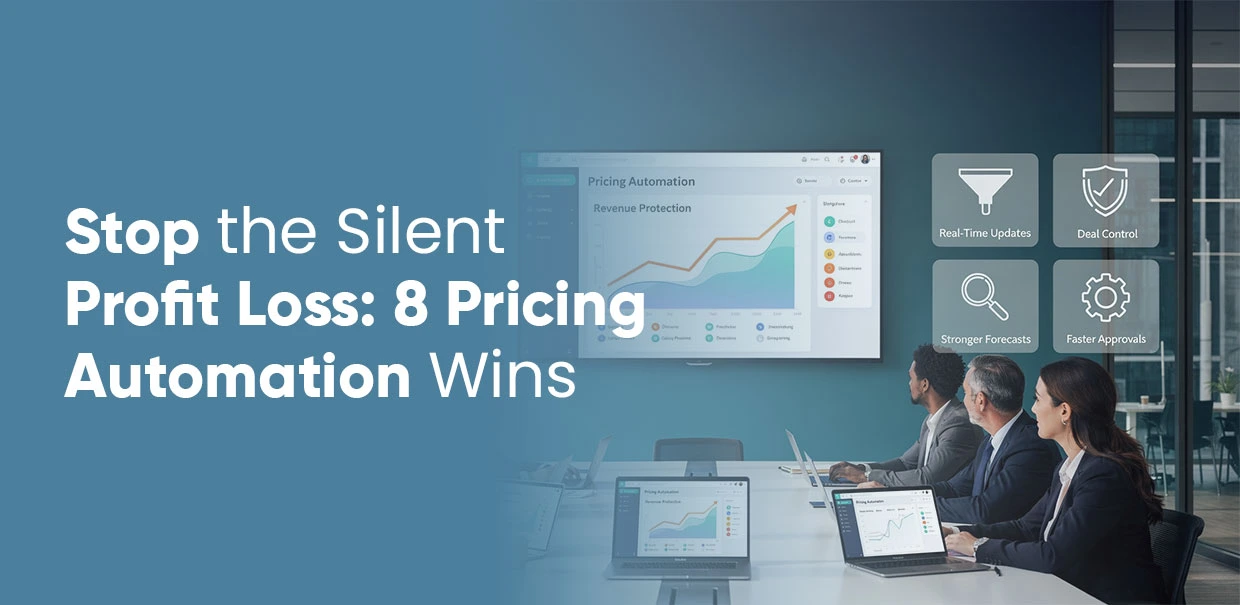
Revenue leakage is one of the most silent profit killers in modern businesses. It doesn’t show up as a dramatic drop in sales. It creeps in quietly through pricing errors, delayed updates, inconsistent discounting, and manual miscalculations. Over time, these small gaps compound into significant losses.
After working with retail, eCommerce, SaaS, and distribution brands across the U.S. for over a decade, I’ve seen one pattern repeatedly: companies that implement pricing automation gain tighter control over margins, faster market response, and stronger revenue predictability.
If you’re wondering how to plug the leaks without increasing overhead, this guide breaks down 8 proven ways pricing automation protects your revenue and strengthens your entire pricing strategy.
What Is Pricing Automation?
Before we dive in, let’s clarify the foundation.
What do you mean by pricing automation?
Pricing automation refers to the use of software and intelligent algorithms to automatically set, adjust, and optimize product or service prices based on predefined rules, real-time market data, competitor pricing, demand patterns, inventory levels, and customer behavior.
Instead of manually updating spreadsheets or relying on delayed reporting, automated systems monitor changes continuously and apply price adjustments instantly, within guardrails you define.
The result? More accurate pricing, faster decisions, and fewer revenue gaps.
The Hidden Cost of Revenue Leakage
Revenue leakage often happens due to:
- Manual pricing errors
- Outdated price lists
- Unauthorized discounting
- Inconsistent regional pricing
- Contract pricing mismanagement
- Delayed reaction to market changes
Even a 1–2% pricing inconsistency can significantly impact annual revenue. In high-volume industries, that margin gap can equal millions in lost profit.
Now let’s explore how automation fixes these vulnerabilities.
1. Eliminates Manual Pricing Errors
Manual pricing processes rely heavily on spreadsheets, email approvals, and human intervention. Even experienced teams make mistakes, incorrect markups, missed decimal points, outdated formulas, or forgotten updates.
Pricing automation systems apply consistent logic across all SKUs, channels, and regions. Once rules are defined, the system executes them precisely every time.
This consistency removes one of the largest causes of silent revenue loss: human error.
2. Prevents Margin Erosion from Over-Discounting
Sales teams often apply discretionary discounts to close deals faster. While discounts can drive conversions, unregulated discounting erodes margins quickly.
Automation platforms allow you to:
- Set minimum margin thresholds
- Create approval workflows
- Apply dynamic discount rules based on customer segments
- Monitor discount patterns in real time
This structured approach ensures competitive pricing without sacrificing profitability.
3. Responds Instantly to Market Changes
Markets move fast. Competitors update pricing. Demand fluctuates. Inventory levels shift.
If your pricing updates happen weekly or monthly, you’re operating at a disadvantage.
AI-driven pricing automation enables real-time adjustments based on:
- Competitor price scraping
- Demand signals
- Inventory turnover
- Seasonal patterns
Instead of reacting late, your pricing strategy adapts continuously, protecting margins during demand spikes and avoiding overpricing during slowdowns.
4. Reduces Pricing Inconsistencies Across Channels
Omnichannel selling has made pricing more complex than ever. A product might be listed on:
- Website
- Marketplace platforms
- Mobile app
- Physical retail store
- Distributor network
Without centralized control, inconsistencies occur. Customers notice discrepancies. Trust declines. Revenue leaks through mismatched pricing.
Pricing automation solutions centralize pricing logic, ensuring consistent updates across all sales channels simultaneously.
This not only prevents revenue loss but also strengthens brand credibility.
5. Protects Contract and B2B Pricing Integrity
In B2B environments, contract pricing complexity increases risk:
- Custom negotiated rates
- Volume-based discounts
- Tiered pricing structures
- Time-bound agreements
Manual contract tracking leads to expired discounts being applied incorrectly—or negotiated pricing not being honored.
Automated systems manage contract logic dynamically, ensuring:
- Correct pricing per account
- Expiry-based updates
- Margin protection rules
- Automated compliance checks
This eliminates revenue leakage caused by misapplied agreements.
6. Optimizes Inventory-Based Pricing
Excess inventory and stockouts both contribute to revenue loss.
When inventory runs high, static pricing leads to dead stock. When demand surges, underpriced products sell out too quickly, leaving potential revenue untapped.
Automation links pricing with inventory data to:
- Increase prices when stock is low and demand is high
- Offer strategic discounts to clear aging inventory
- Balance sell-through rates
This strategic alignment ensures pricing works as a revenue maximizer, not just a sales tool.
7. Improves Data Visibility and Forecasting Accuracy
Revenue leakage often hides in poor reporting. If leadership doesn’t have real-time margin insights, problems stay undetected.
Automated pricing platforms provide:
- Real-time margin dashboards
- Profit impact simulations
- Pricing performance analytics
- Scenario modeling
With improved visibility, businesses can forecast more accurately and detect anomalies early.
This proactive approach prevents small pricing gaps from turning into long-term revenue drains.
8. Strengthens Governance and Compliance
Pricing compliance is critical in industries like healthcare, manufacturing, distribution, and SaaS.
Manual processes increase the risk of:
- Unauthorized price changes
- Non-compliant discounting
- Audit failures
- Regulatory penalties
Automation introduces structured governance:
- Role-based access
- Approval hierarchies
- Audit trails
- Change history logs
This transparency ensures pricing decisions remain compliant and traceable.
How Pricing Automation Reduces Operational Costs
While the focus is often on revenue protection, automation also lowers operating expenses.
Here’s how pricing automation reduces operational costs:
- Eliminates repetitive manual data entry
- Reduces time spent on spreadsheet management
- Minimizes rework caused by pricing errors
- Decreases dependency on large pricing teams
- Speeds up price update cycles
By shifting pricing management from manual effort to intelligent automation, teams can focus on strategy instead of administrative tasks.
Operational efficiency and revenue protection go hand in hand.
Advantages of Pricing Automation
Let’s summarize the broader advantages of pricing automation:
- Improved margin control
- Faster time-to-market for price updates
- Increased pricing accuracy
- Reduced human dependency
- Better competitor responsiveness
- Centralized governance
- Enhanced forecasting precision
Organizations that implement automation often see measurable improvements in profitability within months, not years.
If you want a deeper breakdown of the benefits of pricing automation in retail, including margin optimization, dynamic pricing, and competitive intelligence, explore our detailed guide on the benefits of pricing automation in retail.
Choosing the Right Pricing Automation Solutions
Not all systems are created equal. When evaluating pricing automation solutions, consider the following:
- Real-time data integration capabilities
- AI-based predictive modeling
- Competitor price monitoring
- Custom rule-building flexibility
- ERP and CRM integration
- User-friendly dashboards
- Scenario testing and simulation tools
The right solution should align with your business complexity, whether you manage hundreds or millions of SKUs.
Why Pricing Automation Is Becoming a Competitive Necessity
Modern markets are too dynamic for static pricing strategies. Customers compare prices instantly. Competitors react quickly. Margins are thinner than ever.
Businesses that still rely on manual pricing are not just inefficient; they are exposed.
Pricing automation shifts pricing from reactive to proactive. Instead of fixing problems after revenue leaks occur, you prevent them before they happen.
That’s a fundamental competitive advantage.
Final Thoughts
Revenue leakage rarely comes from one major mistake. It comes from small inefficiencies repeated daily.
Manual processes. Delayed updates. Over-discounting. Inconsistent pricing.
Each gap may seem minor, but collectively, they erode profitability.
Pricing automation closes those gaps with precision, speed, and intelligence. It transforms pricing from an administrative function into a strategic growth engine.
If your organization is serious about protecting margins, improving operational efficiency, and competing in a data-driven market, automation is no longer optional; it’s essential.
FAQs
1. How does pricing automation reduce revenue leakage?
It prevents manual errors, controls discounting, ensures consistent multi-channel pricing, manages contract pricing accurately, and responds instantly to market changes.
2. Is AI used in pricing automation?
Yes. AI-driven systems analyze real-time data, forecast demand, monitor competitors, and recommend optimal pricing strategies dynamically.
3. What is pricing automation, and how does it work?
Pricing automation uses AI and software tools to automatically set, update, and optimize product or service prices based on real-time data like demand, competitor pricing, and inventory levels.
4. How does pricing automation reduce operational costs?
It reduces manual workload, minimizes billing disputes, decreases pricing errors, and automates approval workflows, which lowers labor and administrative expenses.
5. What industries benefit most from pricing automation?
Retail, e-commerce, manufacturing, SaaS, distribution, and B2B enterprises benefit significantly due to complex pricing models and competitive markets.
6. Is AI-driven pricing automation suitable for small businesses?
Yes. Many modern pricing automation solutions are scalable and cloud-based, making them accessible and affordable for small and mid-sized businesses.

 Sep 22, 2026

