


Volatile Demand and Fragmented Stock Signals Create Stockout and Overstock Risk
Retail replenishment decisions depend on sales velocity, promotions, store-level inventory, open orders, supplier lead times and transfer rules. When these signals are refreshed manually or analyzed in isolation, planners react later to demand changes, spend more time on low-value review and carry higher risk of stockouts, excess inventory and avoidable expediting.
Common challenges include:
- Disconnected demand signals: Sales history, promotions, store demand and inventory positions can require consolidation before planners have a reliable view.
- Stockout and excess risk: Without consistent exception detection, shortages and overstock conditions may be identified later than desired.
- Manual safety-stock decisions: Safety stock and replenishment recommendations can require repeated planner analysis across large SKU and store combinations
- Supplier and transfer complexity: Lead times, store-to-DC availability and transfer rules add complexity to replenishment decisions.
- Planner workload: Routine replenishment review can consume time that could be redirected to exceptions and higher-value planning decisions.
AI-Assisted Replenishment with Demand Sensing and Exception Management
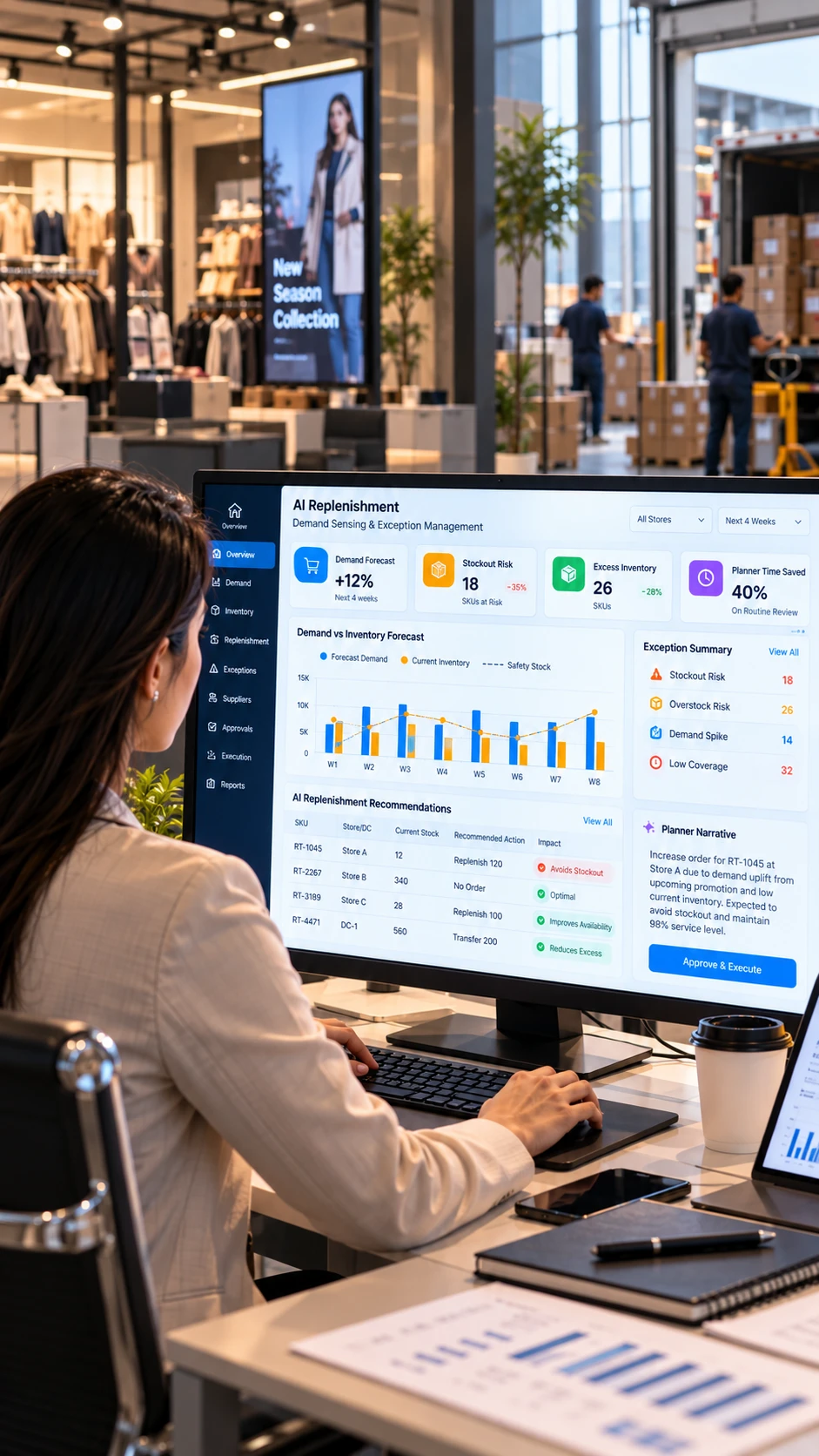
The workflow continuously integrates demand and supply signals, refreshes the forecast, applies replenishment and safety-stock rules, identifies material exceptions and generates a planner narrative explaining the recommended action. Approved replenishment decisions are then published to ERP, planning or warehouse systems.
The solution uses:
- Demand signal collection: Bring together sales history, current inventory, promotions and store demand.
- Forecast and stock analysis: Refresh the expected demand view and compare it with available inventory.
- Stockout / excess detection: Apply exception rules to identify inventory positions that need action.
- Safety-stock optimization: Evaluate replenishment needs against supplier lead time, transfer rules and service requirements.
- AI replenishment recommendation: Present the planner with a concise recommended action and supporting context.
- Planner review and approval: Keep the replenishment decision with the inventory or merchandising planner.
- PO / transfer execution: Release approved replenishment actions through the appropriate ERP or WMS workflow.
Quantified Evidence for Smarter Inventory and Replenishment

20–50% forecast-error reduction
AI-driven forecasting can materially reduce demand-forecast error in volatile operating environments.
Up to 65% fewer lost sales from unavailability
More accurate forecasting and replenishment can reduce lost sales and product unavailability.
99.5% automation reliability
Tecnoprism delivery evidence from a global automation estate that included stock replenishment, warehouse sync and exception-alert workflows.
