


AI-Powered Claims Processing:
FNOL to Settlement

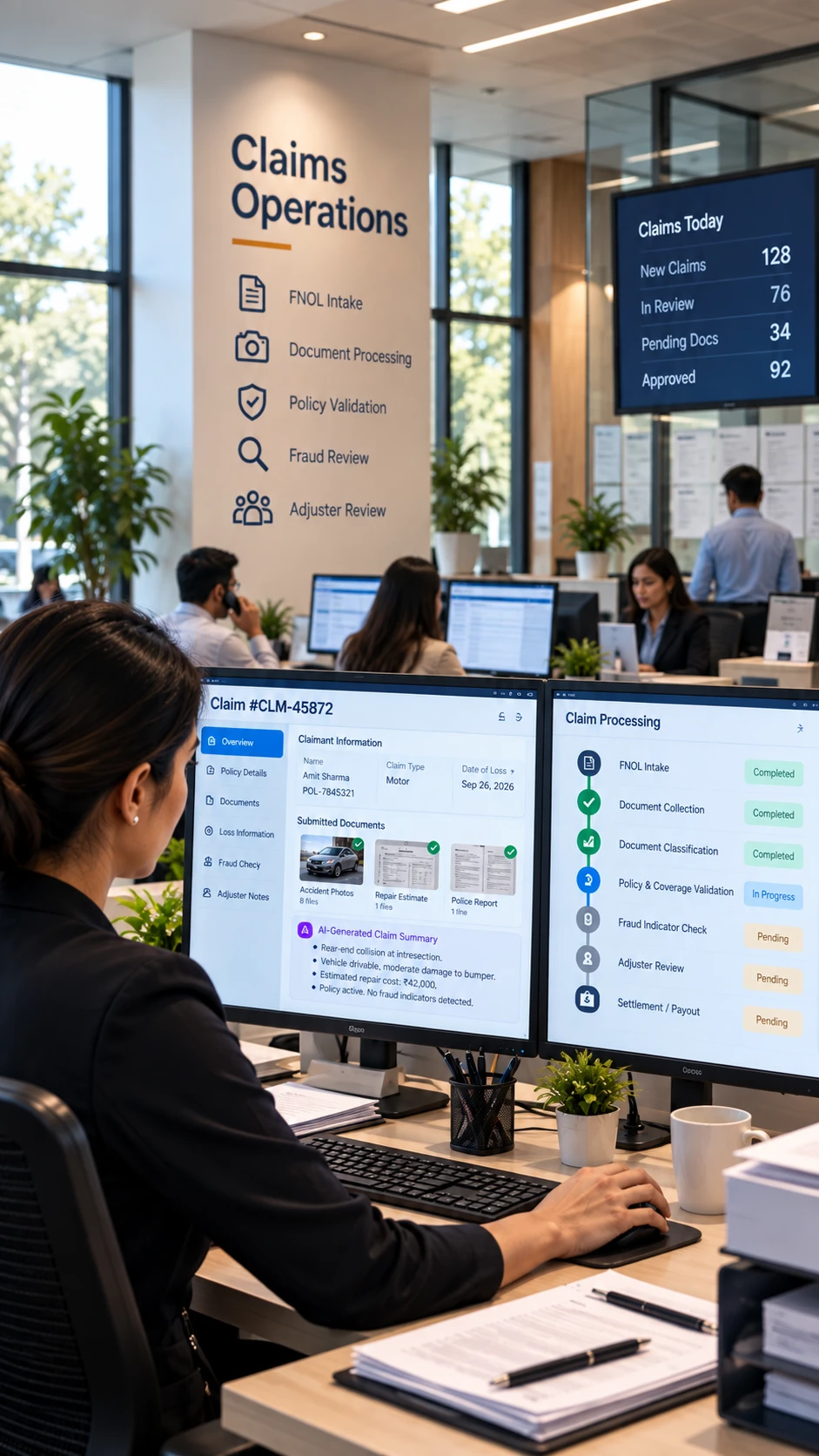
Orchestrate first notice of loss, policy and coverage context, document evidence, fraud indicators, adjuster review and settlement routing to shorten claims turnaround while preserving human accountability.

Business challenge

Claims Turnaround Slows When FNOL, Evidence, Coverage and Fraud Review Are Disconnected

Claims teams must capture FNOL data, collect evidence, validate policy context, assess loss information, identify fraud indicators, summarize the file and route the case to an adjuster. Manual hand-offs across channels and systems increase status calls, duplicate handling and adjustment effort, particularly in high-volume low-complexity claims.

Common challenges include:

  • Variable FNOL intake: Claims may begin through different channels with different levels of completeness.
  • Document-heavy processing: Claim forms, photos, repair estimates and policy information must be collected and organized before review.
  • Manual classification and validation: Teams need to determine document type, completeness and relevance before the claim can progress.
  • Triage and fraud review effort: Policy details and fraud indicators need to be considered before the case is routed or escalated.
  • Adjuster preparation time: Adjusters can spend significant effort assembling claim facts before making a decision or requesting additional information.

Straight-Through Claims Orchestration with Exception-Based Adjuster Review

The workflow digitizes FNOL, classifies and validates claim documents, applies policy and fraud rules, prepares a structured claim summary and routes cases by complexity. Low-risk steps can progress automatically while adjusters retain authority for coverage interpretation, reserve decisions, settlement and exceptions.

The solution uses:

  • Automated FNOL intake: Capture the initial claim and establish the case with policyholder and loss context.
  • Intelligent document collection: Use Collect and organize claim forms, photos, estimates and supporting evidence.
  • Document classification and validation: Identify document types and check whether the information required for processing is available.
  • Claim triage and fraud indicators: Apply rules to prioritize the claim and highlight potential fraud or exception signals.
  • AI-generated claim summary: Give the adjuster a concise, structured summary of the claim and supporting information.
  • Adjuster review: Keep coverage, liability and settlement judgment with the claims professional.
  • Settlement / payout routing: Route the approved outcome into the core claims and payment process.
Smarter invoice processing solution

Quantified Evidence for Digital Claims Processing

Results

30–40% faster claims processing

A P&C insurer cut processing time by 30–40% after automating high-volume, low-risk claims.

20–30% lower claims-adjustment expense

Digitized auto-claims journeys can reduce claims-adjustment expense materially.

10–15 pts customer-satisfaction uplift

Digitized claims journeys have produced double-digit gains in customer satisfaction / NPS.

From Document-Heavy Claims Handling to
Digital FNOL-to-Settlement

Claims handling shifts from sequential manual processing to a digital journey where data is captured once, evidence is validated early and routine decisions are automated or prepared for adjuster review. Human judgment remains concentrated on complex losses, coverage questions and exceptions.

    The workflow

    How AI-Powered Claims Processing Works

    The workflow connects FNOL intake, evidence capture, validation, fraud and risk analysis, AI-assisted claim summarization, adjuster review and settlement routing.

    01 INTAKE

    Claim Initiation / FNOL

    The claim begins with first notice of loss and the core case details are captured for processing.

    • Policyholder and policy reference
    • Loss event details
    • Initial claim description and channel

    Technology / System: FNOL / Claims Intake

    02 COLLECT

    Collect Claim Documentsn

    Supporting information is gathered and associated with the claim.

    • Claim forms
    • Photos or evidence
    • Repair estimates and supporting documents

    Technology / System: IDP / Evidence Capture

    03 VALIDATE

    Classify & Validate Documents

    Documents are classified and checked for relevance, completeness and basic processing requirements.

    • Document type
    • Required evidence / completeness
    • Policy and claim reference validation

    Technology / System: Coverage + Data Validation

    04 TRIAGE

    Claim Triage & Fraud Indicators

    Rules evaluate the claim for priority, routing and potential fraud or exception signals.

    • Claim severity / complexity
    • Fraud indicators
    • Escalation or specialist-review requirements

    Technology / System: Fraud / Risk Analytics

    05 SUMMARIZE

    GenAI Claim Summary

    Generative AI organizes the claim facts and evidence into a concise summary for adjuster review.

    • Loss summary
    • Policy and evidence context
    • Key exceptions or risk indicatorst

    Technology / System: GenAI Claim Summary

    06 REVIEW

    Adjuster Review

    The adjuster reviews the claim, supporting evidence and AI-prepared summary before confirming the next action.

    • Coverage and claim assessment
    • Request additional information if needed
    • Approve, adjust or escalate the claim outcome

    Technology / System: Adjuster Review / Authority Control

    07 SETTLE

    Settlement / Payout Routing

    The confirmed claim outcome is routed through the core claims system for settlement or payout handling.

    • Settlement decision
    • Approval / payout routing
    • Claim status and system update

    Technology / System: Core Claims / Payment Routing